Miele error codes: what they mean and what to do


A Miele error code tells you which system has stopped the appliance: on a dishwasher F11 is a drain fault, F24 a heating relay fault and F70 the Waterproof leak protection; on a washing machine F11 is a drain fault and F20 a heating fault; on a coffee machine F73 means the brew unit cannot return to its start position. The meanings below are taken from Miele UK’s own customer assistance pages and operating instructions, and LE Company, which repairs Miele appliances in London, adds what our engineers check. Many codes clear after the first steps Miele gives; if a code comes back, the appliance needs an engineer. For repairs, see our Miele repair page.

Miele dishwasher error codes

Older Miele dishwashers show numbered codes such as F11 and F70. Newer ones, the G 5000 range from 2019 and the G 7000 range, show most faults as words: “Drain” instead of F11, “Waterproof” instead of F70, and a general “Fault F…” for the rest. F78 is the one number those manuals still list.

What does F11 mean on a Miele dishwasher?

F11 is a drain fault: the drain pump is blocked or the non-return valve is not seated properly, and water is left in the cabinet. Miele’s first steps: unplug the machine, scoop out the water, clean the non-return valve and the drain pump, turn the pump impeller by hand, refit the filters and restart. On G 7000 and G 5000 Discovery machines built from 2019 the lower spray arm comes out first, and the part is called the drain pump cover. If F11 returns, call an engineer.

Miele dishwasher F24

F24 is a fault in the heating relay contact. There is nothing for the user to do: Miele says to book a repair.

Miele dishwasher F70: the Waterproof system

F70 means the Waterproof leak protection has tripped: the programme stops and the drain pump runs. Miele says to close the stopcock, switch the machine off and unplug it, then call service. Leaks are the subject of our Miele dishwasher leaks guide.

Miele dishwasher F14, F78 and F79

F78 is a blocked circulation pump, usually one that has dried out after a long break or at first use. F14 can be the same stuck pump, or a fault in the water intake or the pressure and heating level switches. For a stuck pump, Miele advises pouring 1 litre of warm water (no hotter than 75 °C) with 3–5 drops of rinse aid into the cabinet, waiting 5 minutes and restarting, two or three times. F79 is a circulation pump fault and needs a repair.
Not every dishwasher fault shows a code. In October 2026 we attended a Miele G 6260 whose door lock had broken: a piece of the lock had snapped off inside the door, and both the door lock and the door opener had to be replaced. See our Miele dishwasher repair page.

Miele washing machine error codes

F11: drain restricted. The drain hose end is more than 1 m high or kinked, or the drain filter or pump is blocked. Straighten the hose, drain the water slowly through the drain filter (it can be hot), clean the filter and check the pump impeller turns.
F20 or “Heating fault”: either Thermostop, where the programme simply pauses until the water reaches temperature, or a heating fault. Disconnect from the mains for at least 2 minutes and restart; if it persists, call an engineer.
F10, “Water inlet fault” or the Check inlet light: water is not coming in. Open the stopcock, clean the inlet filter and straighten the hose. Miele’s test for pressure: a fully open stopcock should give at least 5 litres in 15 seconds.
F1: a short circuit in the water temperature sensor circuit; it needs a repair. Do not confuse it with the “i” light and a “1” in the display, which is not a fault: it is a reminder that no wash above 60 °C has been run for a long time. Run Cottons at 90 °C with a machine cleaner or powder detergent.
F220: the machine is leaking. Miele notes it can also appear by mistake: disconnect, check for water, and if there is none, reconnect and run a programme.

Miele oven error codes: F44, F10 and F235

Oven F44: a technical fault. Miele says to switch the power off at the circuit breaker for 20 seconds; if F44 comes back, call an engineer.
Steam oven F10: a water inlet fault. The feed pump may have dried out after a long time unused, the suction hose in the water container may be missing or badly fitted, or, with a reverse osmosis system, the water may be too pure for the oven to detect. Steam oven F235: an electronic module fault, which needs a repair. Read why Miele ovens are built to last.

Miele tumble dryer error codes: F2 and F66

F66 (often searched as 066) is mostly dirty fluff filters or a dirty plinth filter. It can also be an overloaded drum, a blocked ventilation grille under the door or a poorly ventilated room. Clean the fluff and plinth filters, vacuum the heat exchanger gently and reduce the load. F2 is an open circuit at the refrigerant temperature sensor and needs a repair. See how to diagnose common Miele dryer issues.

Miele coffee machine error codes

F10: no water is being drawn in. Fill the water container three-quarters full, insert and remove it 10–20 times, then descale. F17: on a built-in machine, mains water is not reaching it (valve closed, hose kinked or the float in the water container stuck); on a countertop machine, very little water is being drawn in. F73: the brew unit cannot return to its start position or is dirty; rinse it without detergent and try less coffee or a finer grind. F74: a fault in valve adjustment; switch off and on, then descale. F77: a valve initialisation error; disconnect from the mains and reconnect. See our Miele coffee machine repair page.

When to call an engineer

Call an engineer when a code comes back after Miele’s first steps, or straight away for codes Miele says need a repair: dishwasher F24, F70 and F79, washing machine F1, steam oven F235 and dryer F2. Every repair we do starts with checking and cleaning the appliance. Many of the codes above, from F11 to F66 and F74, come from filters, pumps and valves that have not been cleaned or descaled, and after a service the appliance often works again. Comparing brands? Read Gaggenau vs Miele.

Book a Miele repair in London

LE Company’s call-out is from £175 + VAT and includes the first 30 minutes on site, when the engineer finds the cause of the fault. The cost of the repair is agreed with you before any work starts. Call +44 203 603 7172, or see our frequently asked questions.
Commercial kitchen equipment repair in London: what breaks and why


LE Company repairs commercial kitchen equipment across London: combi ovens such as Rational and Unox, Winterhalter and Hobart dishwashers, commercial refrigeration, gas ranges and grills. Looking back over our service reports from September to November 2026, one cause runs through most of the breakdowns: water and the lack of regular service. Scale, a blocked wash system, a leak into the electronics. That is why every repair we do starts with checking and cleaning the equipment; after a proper service, much of it starts working again. For the full list of what we cover, see our commercial kitchen repair and catering equipment repair pages.

Combi oven repair: what we find on Rational and Unox

A leak that trips the fuse board. A Unox BakerTop combi oven kept tripping the electrics. Inside, the main water pressure switch had snapped, water had got into the washing and humidity unit, and the leak had damaged the contactor. There were heavy scale deposits underneath. We replaced the washing and humidity unit and fitted a water filter; on the return visit the steam control, burnt out by the earlier leak, also had to be replaced. See our Unox oven repair page.
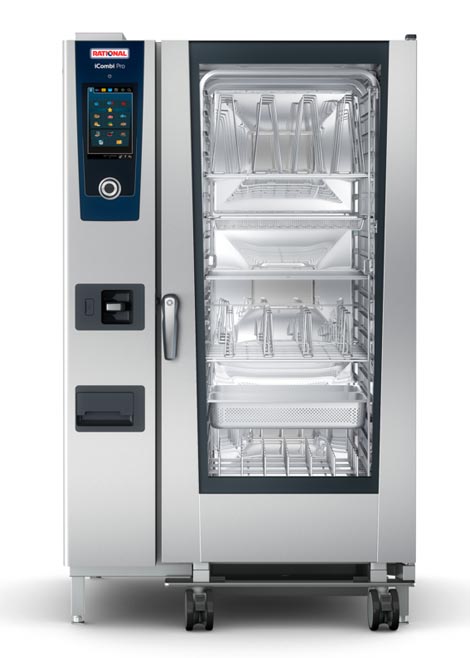
Rational stopped mid-clean with error S_110. A Rational iCombi Pro stopped in an interrupted cleaning cycle with S_110, an automation error during cleaning. We replaced the pump housing, exchanged the water filter cartridge and descaled the whole water system. One detail worth knowing: the oven will not accept a reset of the manual descaling request until a long cleaning cycle has been completed. More codes in Rational oven error codes explained.
Food at the top cooks faster than at the bottom. On a Rational SelfCookingCenter the self-test passed three times with no error. In heating mode the lower fan motor slowed down periodically, and on the motor test it did not reach its rated output. The motor reports no error to the oven, so only a test finds it. On another Rational an impeller out of balance had vibrated hard enough to damage the heating element at its mounting. See our Rational oven repair page and whether a Rational oven is worth repairing.

Commercial dishwasher repair: Winterhalter and Hobart

Descaled with too little descaler. The owner of a Winterhalter hood-type dishwasher had tried to descale it themselves with too little descaler. The residue turned into sludge and blocked the whole waste pipe and the drain pump, and during the cleaning we found ruptured pipes. It took the hose kit, the boiler connections and new flexible pipework, and on the final check a micro-crack in the drain pipe.
Winterhalter error 35. Water was getting into the base of a pass-through machine. The cause was a heavy blockage in the wash system: with the wash pump building pressure, water backed out at the inlet to the wash arms. Read Winterhalter error codes.
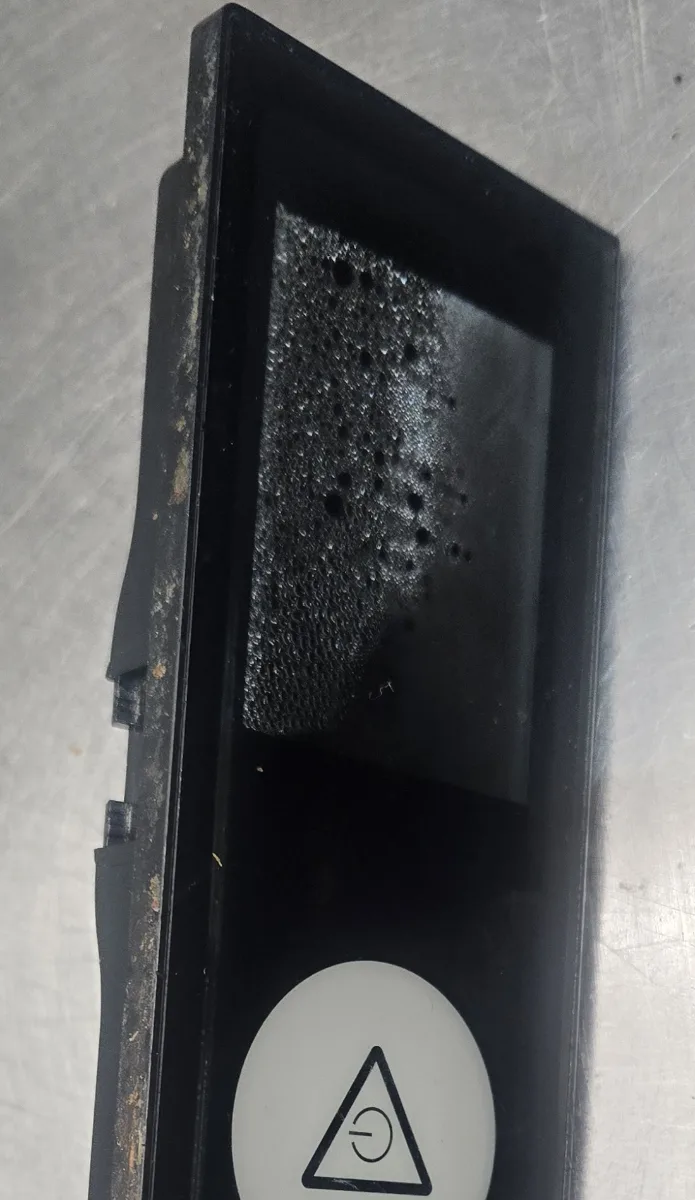
Moisture behind the display. On a Hobart undercounter dishwasher, droplets of water had got behind the screen cover into the display. Read the Hobart display moisture case and Hobart dishwasher error codes.
Hobart dishwasher control panel fascia removed, with water droplets inside the display window

Commercial refrigeration repair

A commercial refrigeration unit had lost its refrigerant through a leaking evaporator. We fitted a new evaporator and leak-tested the system, and then found the compressor had failed as well, so the unit could not run until a new compressor was fitted. A refrigerant leak left too long takes the compressor with it. See our commercial refrigeration repair page.

Why regular service is the key

Almost every case above began with water, scale or dirt that a regular service would have caught: a water filter not changed, a wash system not cleaned, a machine descaled the wrong way. Every repair we do starts with checking and cleaning, and very often the equipment works again after the service alone. For planned maintenance, see catering equipment maintenance and restaurant equipment maintenance.

Book a commercial kitchen equipment repair in London

LE Company’s call-out is from £175 + VAT and includes the first 30 minutes on site, when the engineer finds the cause of the fault. The cost of the repair is agreed with you before any work starts. Our engineers are Gas Safe registered. For a breakdown during service, see emergency restaurant equipment repair, or call +44 203 603 7172.

Lacanche vs AGA: an engineer’s comparison


A Lacanche is a modern premium range cooker; an AGA is a cooker for enthusiasts. LE Company engineers repair both in London, and from what we see: the classic AGA was designed many years ago to heat the house as well as to cook, it is very heavy, and its ovens are small. Even the modern AGA made only for cooking has nothing exclusive that would make us tell you to buy one. People who choose an AGA usually want an AGA, often because their parents had one. If you simply want a premium cooker, choose the Lacanche. For repairs, see our Lacanche repair and AGA repair pages.

What is the difference between an AGA and a range cooker?

An AGA is not built like an ordinary range cooker. It is made of iron and very well insulated, and the heat it builds up stays inside it. Its main purpose was not only to cook but to heat the home, which is why the classic AGA always has two hot plates on top that are always hot. The first AGA was invented in 1922 by the Swedish physicist Gustaf Dalén. AGA itself says its older cookers were fully on around the clock, while on today’s models individual ovens and hotplates can be switched on and off as needed.
A range cooker such as a Lacanche heats only when you turn it on. On the Lacanche ranges we usually work on, the left oven is gas, the right oven is electric, and the burners on the hob are gas.

Lacanche vs AGA: ovens and cooking

The ovens of an AGA are mostly very small, so there is little space to cook in. In return, the iron body and good insulation hold the temperature constantly. The ovens of a Lacanche heat up when you need them and switch off when you finish, and its hob has a gas flame that lights instantly and is very beautiful.
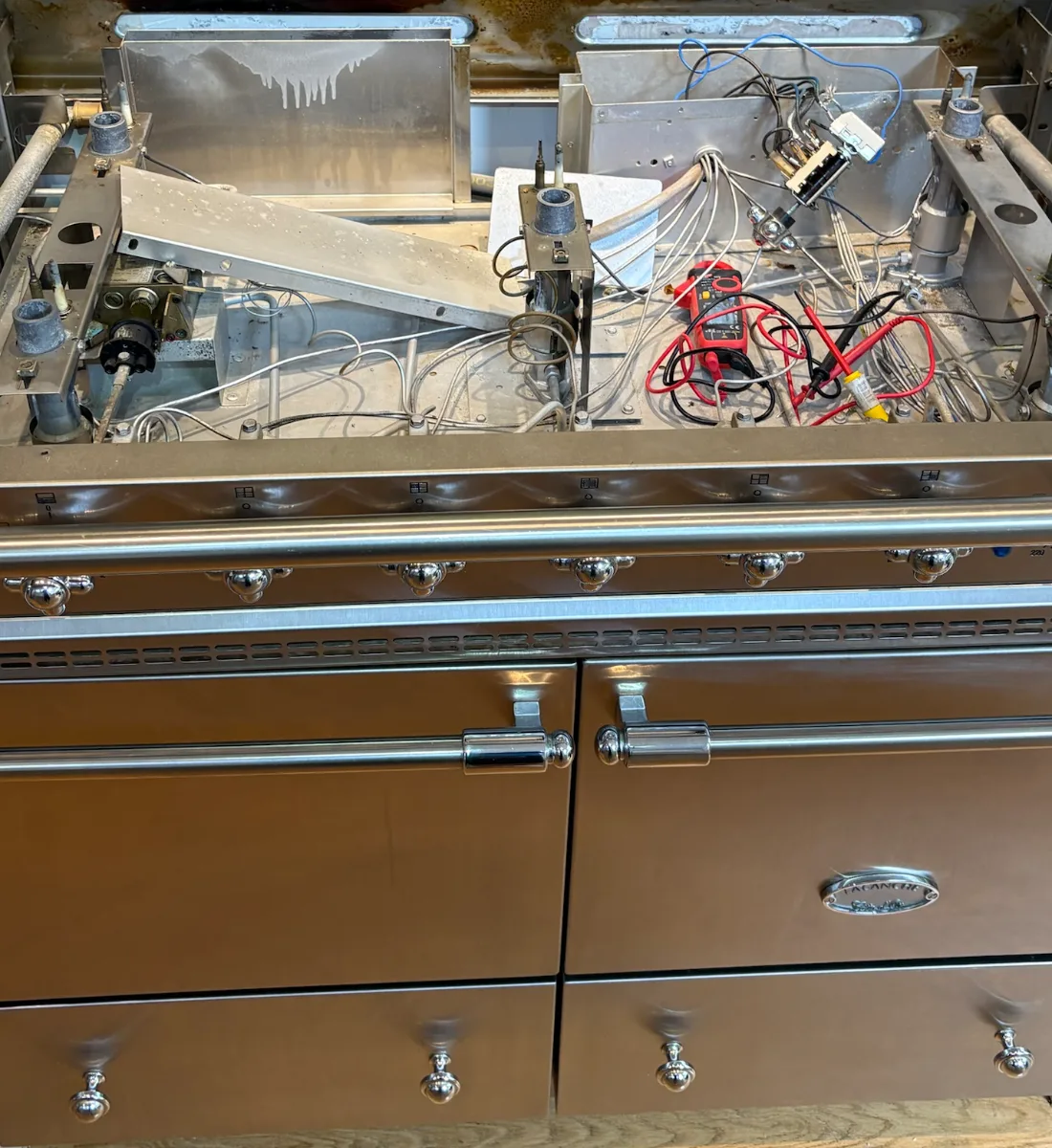
Lacanche range cooker with the hob top lifted to reach the oven controls and wiring

Is an AGA worth it?

Only if you want an AGA for its own sake. As engineers, we find nothing special or exclusive in it that would let us say: yes, buy it. Keep the summer in mind too. An AGA holds heat all the time, and if you cook on it in summer, that heat goes into your kitchen and has to go somewhere.

Is a Lacanche worth it?

Yes, if you want a premium range that rarely breaks. There is almost no electronics in a Lacanche: the controls are simple switches and thermostats, which is why our Lacanche oven not heating case came down to one burnt switch. Its oven is painted metal, easy to wipe clean, and its doors are light enough for an engineer to lift off, which keeps servicing simple. For a Lacanche against the other French range, see our Lacanche vs La Cornue comparison, and how to clean your Lacanche oven.

Lacanche or AGA: which should you buy?

Choose a Lacanche if you want a modern premium cooker: gas burners, a gas and an electric oven, simple controls and few repairs. Choose an AGA if you want an AGA: a heavy iron cooker that keeps its heat, warms the kitchen and has two hot plates always ready, and you accept small ovens and a warm kitchen in summer. Whichever you have, regular servicing keeps it going, as in our AGA oven servicing job.

Book a Lacanche or AGA repair in London

LE Company’s call-out is from £175 + VAT and includes the first 30 minutes on site, when the engineer finds the cause of the fault. The cost of the repair is agreed with you before any work starts. Our engineers are Gas Safe registered. Call +44 203 603 7172, or see our frequently asked questions.

Gaggenau vs Miele: an engineer’s comparison


Gaggenau and Miele are both premium German brands, and both make a top line and a lower line. LE Company engineers repair both in London, and from what we see inside them: if you plan to spend between £1,000 and £2,000 on an appliance, at 2025–2026 prices, there is no real difference between the two. In premium fridges Gaggenau is ahead: it moves cold air better and uses less energy. In dishwashers the washing quality is practically the same. In ovens both are at the top, but recently SMEG has overtaken them. For repairs, see our Gaggenau repair and Miele repair pages.

Gaggenau vs Miele fridge

With both brands, look at how the fridge is cooled, not at the badge. If you buy a fridge where only the back panel is cooled and a fan stirs the air, do not expect a good flow of cold air inside. You can open it four or five times a day. Open it more often and the air temperature rises, on average to around 9–11°C. The food already inside is not harmed, because it holds its own temperature. But new food you put in will only be properly cold the next morning, and you will not get that feeling of cold air meeting you when you open the door. That you only get with top-class fridges. We explain the difference in detail in are expensive fridges worth it.
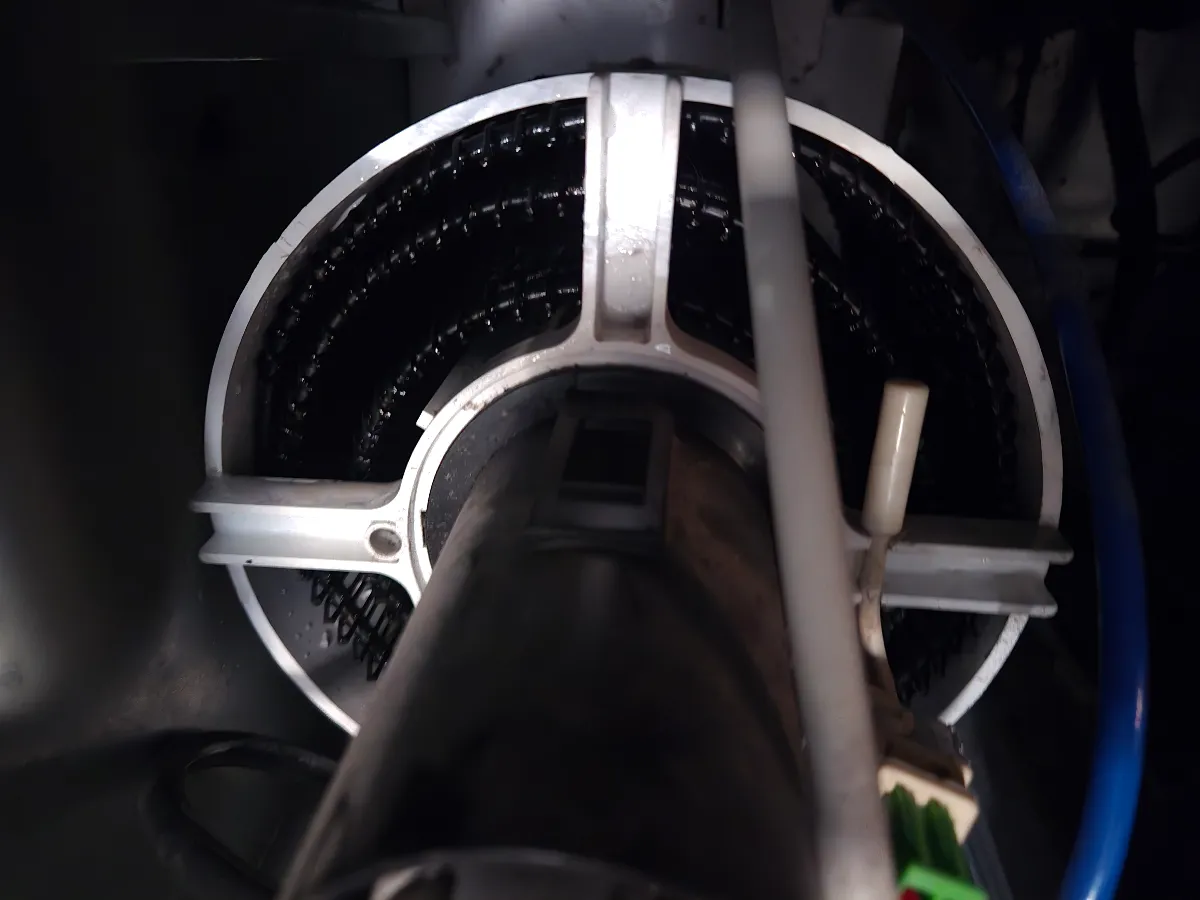
In the premium models, Gaggenau is ahead. Its whole system is built to move the air: the air is driven through the cooling panels, through the evaporator inside them, and back into the compartment. For low energy use we would also put Gaggenau first. Its one weak point is a condenser that needs cleaning, as in this Gaggenau freezer that was alarming and not freezing. See our Gaggenau fridge repair page, and our Liebherr vs Gaggenau fridge comparison.
Gaggenau freezer condenser after cleaning by LE Company

Gaggenau vs Miele oven, and why SMEG has overtaken both

In ovens, both Gaggenau and Miele hold top positions. Recently, though, SMEG has overtaken them. Its Galileo Omnichef combines three ovens in one: a microwave, a steam oven and a conventional oven.
Its handling of water is excellent. There is practically no water left in the system: when you finish cooking, the oven makes you empty it. That is why you will practically never get a leak. We tested it hard for five years, expecting something to break. In all that time we replaced only one conventional heating element, and that happens on every make of oven.
SMEG’s build quality is very high, and we would put it at the very top. Every joint is fitted with a gasket, which we do not see on any other make. You will practically never hear a rattle, a vibration or a scrape, and opening and closing the door is a pleasure in itself. Even the smaller, compact model has an inside that looks practically no different from a full-size Gaggenau or Miele. See why a Smeg oven stops working, our SMEG oven repair and Gaggenau oven repair pages, and why Miele ovens are built to last.

Gaggenau vs Miele dishwasher

Here the quality is the same, and the leak protection is the same. Washing quality is practically identical. Choose by what you like: in the new models, look at the functions and how convenient they are to use. If your Miele shows a code, see Miele error codes. See our Miele dishwasher repair page and what to do when a Gaggenau dishwasher is not draining.

Who makes Gaggenau and Miele?

Miele is a family-owned company, owned by the Miele and Zinkann families. Its ovens are made in Oelde, its steam ovens and hobs in Bünde and its dishwashers in Bielefeld, all in Germany. Gaggenau has been part of BSH, the Bosch home appliance group, since 1995. It names factories in Germany, France, Slovenia, Spain and Turkey; the built-in Gaggenau fridge we repaired in November was labelled made in Turkey.

Warranty and spare parts

Miele gives a standard 2-year manufacturer’s guarantee on its domestic appliances in the UK, with longer cover in promotions or as a paid extension. Gaggenau’s UK terms extend its 2-year warranty by a further 3 years, to 5 in total; check the conditions when you register the appliance. Both brands say spare parts are available for up to 15 years after a model goes out of production. “Up to” matters: in October we met a Gaggenau wine fridge whose control board had already been discontinued.

Is Miele really tested for 20 years?

Miele tests some appliances to simulate 20 years of average household use, for example 5,600 cycles for dishwashers and 2,160 hours for ovens and steam ovens. Miele itself says this is not a guarantee of durability, and its list does not include fridges, coffee machines or hobs.

Gaggenau or Miele: which should you buy?

For a fridge in the £1,000–2,000 range, either; check how it is cooled. For a premium fridge, Gaggenau, for the air flow and the low energy use. For a dishwasher, whichever functions you like. For an oven, look at SMEG as well as Gaggenau and Miele. If you are comparing range cookers, see our Lacanche vs La Cornue comparison.

Book a Gaggenau or Miele repair in London

LE Company’s call-out is from £175 + VAT and includes the first 30 minutes on site, when the engineer finds the cause of the fault. The cost of the repair is agreed with you before any work starts. Call +44 203 603 7172, or see our frequently asked questions.
Lacanche vs La Cornue: an engineer’s comparison


Lacanche and La Cornue are the two French range cookers our customers ask us about most. LE Company engineers have been repairing and servicing both in London for about ten years, so this comparison is not about brochures: it is about what breaks, what it costs to fix and what each cooker is like to live with. In short, La Cornue is the more heavily built and more expensive range, and you should expect much bigger repair bills; Lacanche is the more affordable of the two and costs far less to keep running. For repairs, see our Lacanche repair and La Cornue repair pages.

Lacanche vs La Cornue: price to buy and price to repair

La Cornue costs much more than Lacanche, both when you buy it and every time a part is needed. Before you buy one, it is worth knowing that if something breaks, the repair will cost a lot, and often very much more than on a Lacanche.
One example: the igniter for the gas section of a La Cornue used to cost about £350 and today costs more than £1,000.

Which is better built?

La Cornue. You feel it the moment you work on one. The metal is thicker, the insulation inside is better, and the oven holds a set temperature more steadily than a Lacanche. The doors are so heavy that it takes two hands, and some effort, to take one off.
A Lacanche is lighter. An engineer can lift a door off, stand it in the corner and start work. That lightness is part of why it is cheaper to service.
Lacanche range cooker with the hob top lifted to reach the oven controls and wiring

Which breaks down more often?

Lacanche, much less often. There is almost no electronics in a Lacanche: the controls are simple switches and thermostats, which is why our Lacanche oven not heating case came down to one burnt switch. A La Cornue is packed with electronics, and more parts means more that can fail.
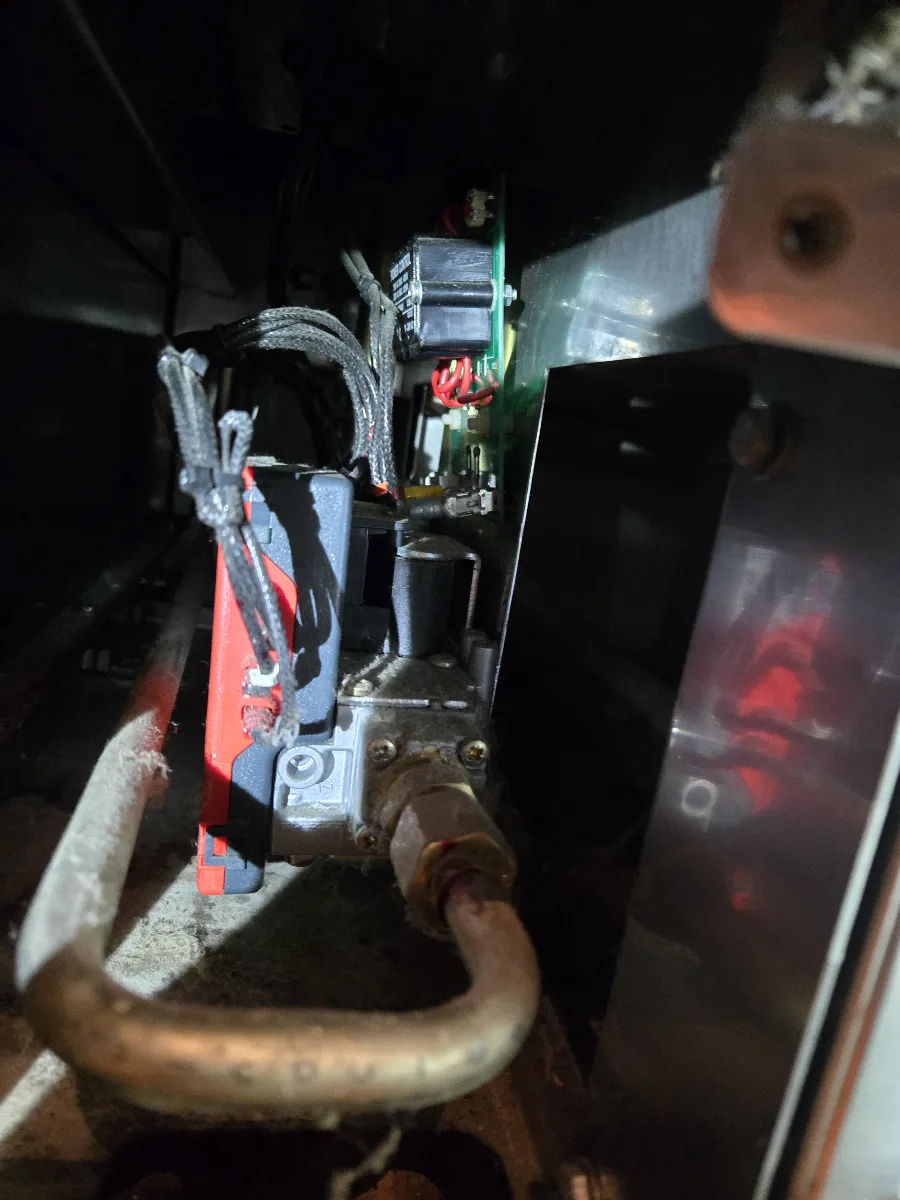
La Cornue gas oven valve with the ignition wiring and control board behind it
In November we attended a La Cornue whose gas oven kept switching off. The igniter was heating but no longer reaching the temperature needed to light the burner, its wiring and fixings had rusted, and the bolts had to be drilled out. The igniter system and glow element both had to be replaced.

The La Cornue gas valve problem

Older La Cornue ranges, the really old ones, have very good gas valves. Modern models have a weakness. The heavy decorative brass knobs are fitted to aluminium gas valves. Over the years the valve wears, the weight of the knob starts to turn it down by itself, and the flame drops or goes out on its own. The only repair is a new valve, and it is an expensive one.
A Lacanche does not have this problem. Its knobs are light and not weighted to one side, so the cooker works the same way for its whole life.

Looks, burners and cleaning

On looks, La Cornue wins: it looks more expensive and more striking, with a lot of copper trim. Kept polished, the copper shines like gold. The burners are another matter: over time they gradually bend from the heat and end up looking terrible, and replacing each one costs around £300.
Inside the ovens the two are built differently. A La Cornue oven is lined with aluminium, which is practically impossible to clean. A Lacanche oven is painted metal: it is thinner and less insulated, so it does not hold heat as well, but it is easy to wipe clean.

Where they are the same: door hinges

On both ranges the most common problem is the oven door hinges. Here the two makes meet: replacing or repairing the hinges costs about the same on a Lacanche as on a La Cornue.

How long do they last?

With proper care, there is practically no limit to the service life of either cooker. Hinges, igniters, switches and thermostats wear out and are replaced, and the range carries on. Keeping it clean matters: see how to clean your Lacanche oven and how to look after your La Cornue.

Lacanche or La Cornue: which should you buy?

Choose a Lacanche if you want a beautiful French range that will practically never take your money. It looks good, lights instantly, and its flame is very beautiful, even more so than on a La Cornue. It is the more affordable of the two to buy and by far the cheaper to keep running.
Choose a La Cornue if you want the heavier build, the thicker metal and the steadier oven temperature, and you are ready for large repair bills when something does break.
If you are comparing other range cookers, we also repair AGA, Rangemaster and Wolf. See also Gaggenau vs Miele and Lacanche vs AGA.

Book a Lacanche or La Cornue repair in London

LE Company’s call-out is from £175 + VAT and includes the first 30 minutes on site, when the engineer finds the cause of the fault. The cost of the repair is agreed with you before any work starts. Our engineers are Gas Safe registered. Call +44 203 603 7172, or see our frequently asked questions for prices and parts.

Lacanche oven not heating: a burnt selector switch


When a Lacanche oven stops heating completely, the cause can be a single burnt switch rather than the elements or the thermostat. That is what LE Company engineers found this autumn in a home in South London, on a Lacanche double-oven range cooker whose electric oven side had stopped working. One switch was broken; the owner chose to renew the whole oven control set, and the cooker is working again. Here is what we found and why. For our full Lacanche service, see Lacanche repair in London.

Why is my Lacanche oven not heating?

On arrival the oven was not working at all: no electrical supply was reaching it. On a Lacanche the usual cause of this symptom is the high limit switch, the safety cut-out that disconnects the oven if it overheats, so that was our first suspect. We lifted the hob top to reach the oven controls and wiring.
Lacanche range cooker with the hob top lifted to reach the oven controls and wiring

What we found: a burnt oven selector switch

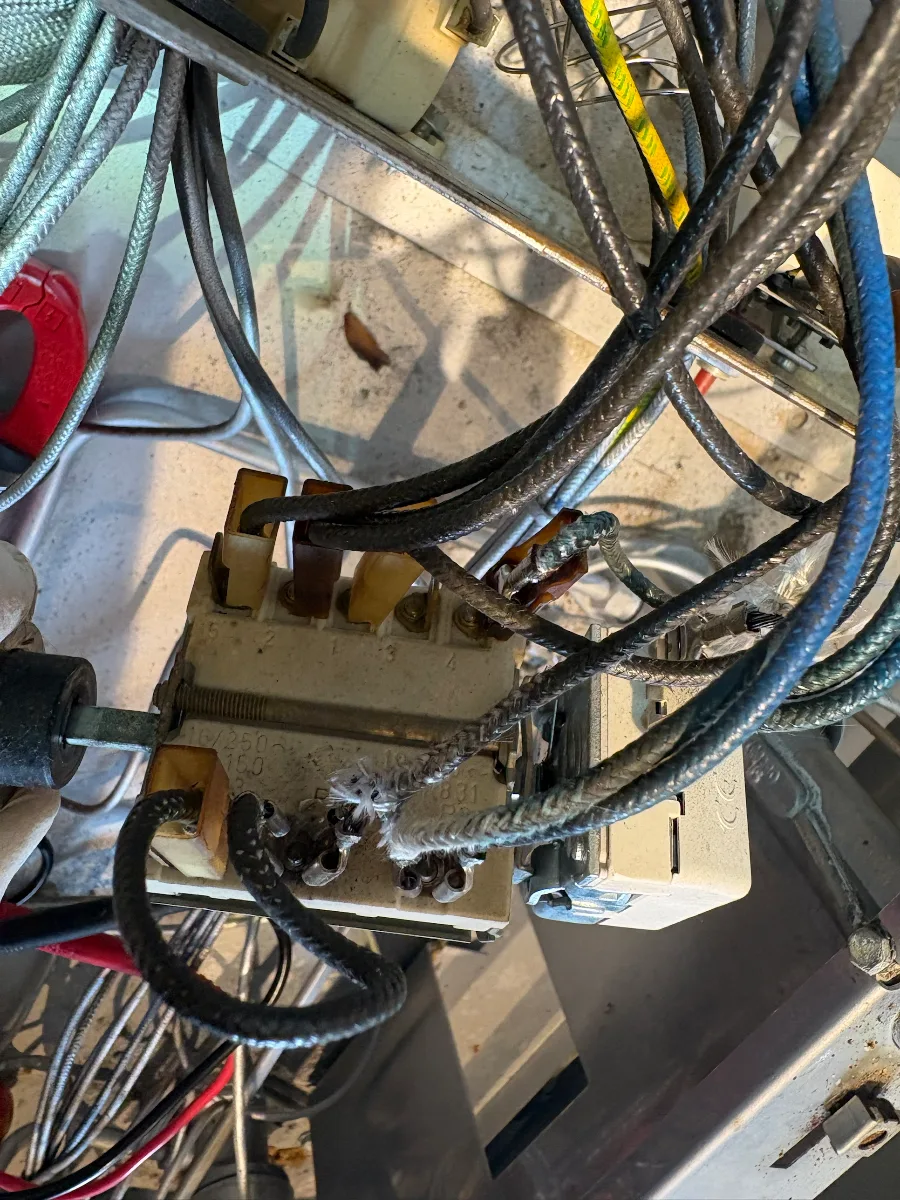
The fault was not the high limit switch. The oven selector (function) switch, the knob that chooses the oven mode, had burnt: its terminals and the ends of the wires connected to it were charred and heat-damaged. All the power for the oven passes through this switch, so when its contacts fail the oven gets nothing.
Burnt terminals and heat-damaged wire ends on a Lacanche oven selector switch
We then tested the rest of the oven circuit. The oven thermostat passed its electrical test, and the high limit switch was working. Both, however, were old, and there was no record of when they had last been changed.
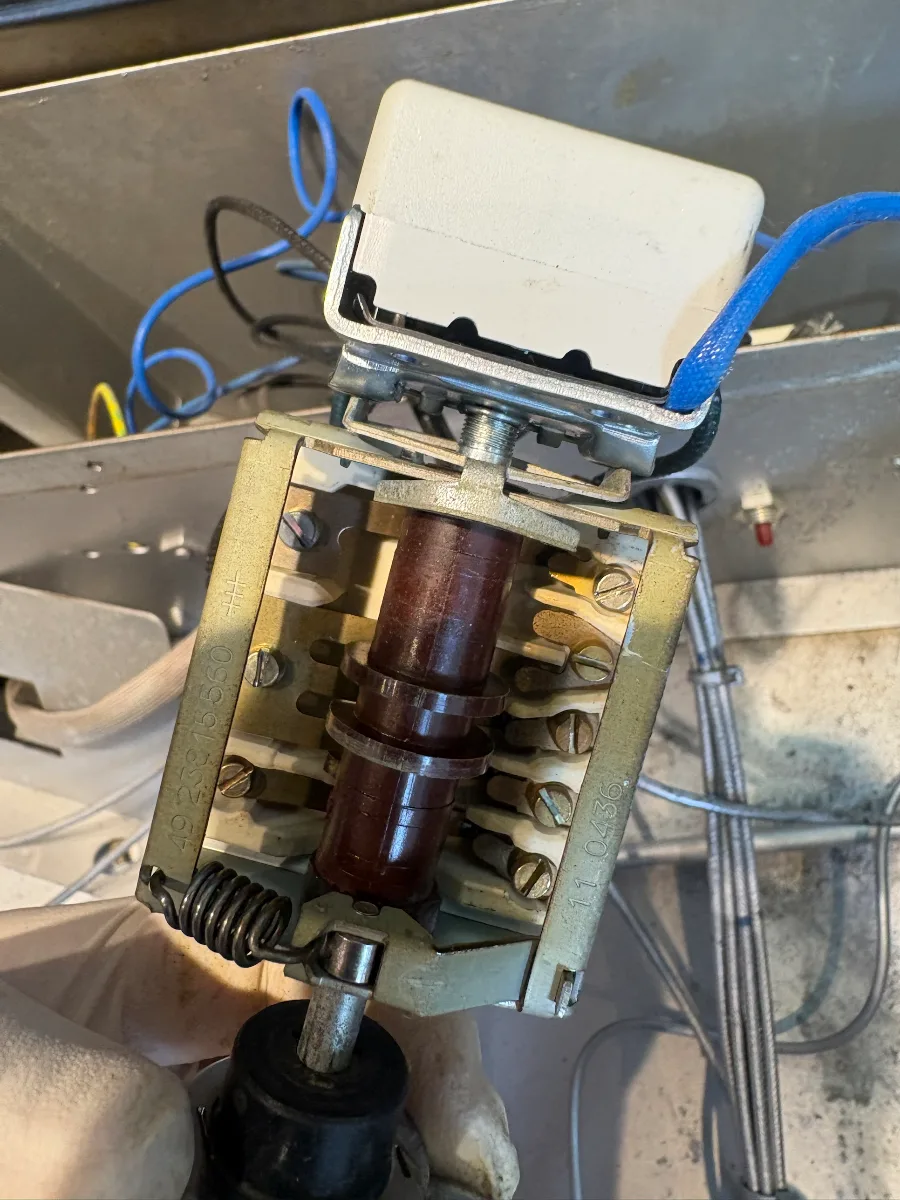
Lacanche oven selector switch removed from the cooker for inspection

A temporary fix the same day

So that the family could cook in the meantime, our engineer removed the switch, cleaned its contacts and refitted it. The oven started working again. This was a temporary measure only: a switch that has burnt once cannot be relied on, so we ordered a replacement.

Why we renewed all the oven controls, not just one switch

Only one part had actually failed. But the thermostat and the high limit switch had been working for the same years in the same heat, and their history was unknown. Replacing just the switch would most likely have meant another call-out, and another wait for parts, when the next old part gave up. The owner agreed to renew all three at once: the selector switch, the oven thermostat and the high limit switch.
On the return visit in November we fitted the three new parts and tested the oven. It is heating normally. In our engineers’ experience, renewing the oven controls in one go like this gives a Lacanche another five to six years without needing attention.

Can I keep using a Lacanche oven with a burnt switch?

No. Burnt terminals mean the connection has been overheating. If your Lacanche oven has stopped heating, or the selector knob feels loose or smells hot, switch the oven off at the isolator and have it checked. A clean cooker also helps: grease and spills that reach the controls under the hob shorten their life, see how to clean your Lacanche oven. If you are choosing between French ranges, see Lacanche vs La Cornue: an engineer’s comparison, and Lacanche vs AGA.

Book a Lacanche repair in London

LE Company’s call-out is from £175 + VAT and includes the first 30 minutes on site, when the engineer finds the cause of the fault. The cost of the repair is agreed with you before any work starts. We repair Lacanche, La Cornue, AGA and other range cookers; see also our electric oven repair and oven repair in London pages, read how we can help with your Lacanche oven, or call +44 203 603 7172, Monday to Saturday, 8am to 8pm. Prices and parts are covered in our frequently asked questions.
Recent job: Why clients want to resuscitate Gagganau ovens


One of the recent jobs we did regarding Gaggenau service was two days ago in Chelsea. It was not an emergency but a regular visit to one of our clients who we visited some time ago regarding his fridge. This time he contacted us stating that he had moved into his dad’s house where is a Gaggenau oven that is more than 14 years old and that was not functioning and hence not used for about 3 years.
Apart from not being a working oven, it was also not cleaned or serviced for a long time. The initial assessment also showed that someone had already tried to repair some of its parts and decided to use the low-quality spare parts, which made the oven working only for a short period.

What we did

Firstly, we did the initial assessment, prepared an estimated quote, so the owner would make a proper and final decision. The repairing of the ovens in a such condition is a good and fun challenge for us and we know that we can definitely bring it back to life and make it working for a minimum 6 extra years, but it is not cheap for the owner. Yes, it is not as expensive as buying a new gaggenau oven but it is definitely about the time that we will require and still the money, which could cover at least 1/3 or even ½ of the new appliance.
The decision was still the same – do the repairing and service. So now we are already in the process of bringing it back to life. Our assumption that it may take for about 2 to 4 weeks depending on the original spare parts delivery. Plus, we want to refresh its sides painting.

Conclusion

Finally, the resuscitation of the old ovens is something what we do, but we are always honest with our clients and we want them to make a rational decision. This case is special, as the client wants to keep the oven as a memory about his father. We respect that and will do our best as usual to make it working for ages again.

Recent job: How we repaired four Rational ovens in Soho


Last week our engineers did something impossible, they repaired four Rational ovens at the save time in the same restaurant in Soho, London. We have a list of the special challenges and cases we meet during the operation of our engineering company and such case topped up this list. Moreover, the manager stated that it was an emergency and we had to react as fast as we could.
The problem was not new, the house where the restaurant is located had some electricity works provided by council. As a result, the voltage spiked forcing all the appliances to restart. None of them went broken, however four out of five Rational ovens that the restaurant has started displaying an error.
Rational oven repair in London

What repair plan we had

It is now clear that the problem was just with the computer system of the Rational ovens but then we had to identify it making sure that nothing else is broken. In order to save time and reduce the pressure on the kitchen, as only one working oven was definitely not enough, we decided to start with two ovens but not with all four.
Rational oven repair we started with a general diagnostic, checked that all the main parts are well functioning one by one. When that was confirmed, we started dealing with the errors. As the errors were the same, we decided to concentrate only on one of those two ovens, so we could start the second one faster. It took us about 20 minutes and the oven was back to life! Then we reactivated the second one, did the final assessment before the usage and passed them into the chef’s hands for the kitchen purposes.
The other two were repaired the same day.

Conclusion

None of the appliances went completely broken only because all of the fuses in the kitchen were fully functioning. Yes, the appliances restarted and could not operate the same way, but nothing inside was burnt. If you faced such or any other issues, feel free to contact us for the engineering assessment and service.

Recent job: How we gave the second life to a wolf oven


One of our clients left us a Wolf oven about four months ago in London. It was broken and he decided to get a new one and found our company to perform installation. However, his broken oven had to be removed before that, in order to avoid the process of getting rid of it he asked if we could take it. That was a deal.
We performed the installation and he was left absolutely happy having his new Wolf oven and having no extra job with the old one.

The old Wolf oven

The old oven was delivered into our warehouse and left there. We had a plan of running an assessment of each part, remove the working ones and use them as the original spare parts as they are always in need.
We want to highlight that Wolf stove repair is one of our regular services we perform weekly, but sometimes our clients even ask us if we can help them finding a specific oven they need. This is what happened two weeks ago from today. Our admin team started the search and after about two-three days we realised that the Wolf oven that we had collected and kept is exactly the one the new client was looking for.

Our solution

The problem was that a few parts were already removed from the oven and we had to put them back plus repair the not working parts. The job was finished this morning. The Wolf oven is now fully working and ready to serve a new owner for the next 6-8 years (depending on care).
We love such cases, we love challenges, so if you need some electrical or gas engineering services, feel free to give us a call.

How to choose a good oven engineer in London


In short, to choose a good oven engineer in London, check their legal competency for your oven type first and then filter for expertise relevant to your oven brand.

Check the legal competency

Under UK law, working on gas and electric ovens requires different legal competencies. Besides, for any oven repairs in London, a reputable engineering company should have public liability insurance.

Legal competency for electric oven engineers

To deal with an electric oven, a good oven engineer must have the specific trade membership. In other words, they must have a valid electrical certificate to ensure they will follow a code of practice when working on your electric oven.
At LE Company, our oven engineers have 17th Edition electrical certificates, which makes us a reliable point of contact for any tasks related to electric ovens.

Legal competency for gas oven engineers

To deal with a gas oven, a good oven engineer must be on the Gas Safe Register, qualified for the specific appliance type in separate. In short, there are the following core competencies:
  • For domestic oven repair and maintenance: Cookers LPG, Cookers NG, Range Cookers LPG, Range Cookers NG
  • For caravanners oven repair and maintenance: Caravans Cookers LPG
  • For commercial oven repair and maintenance: Commercial Catering Range Cookers LPG, Commercial Catering Range Cookers NG
At LE Company, we have all the competencies listed above, which makes us a universal go-to service for any gas oven repair and maintenance task in London.

Check the expertise

Whether it is for gas or electric, domestic or commercial ovens, there is a wide range of manufacturers on the market. Often, they apply their specific technologies and engineering solutions. And luxury brands especially. In other words, when choosing an oven engineer, make sure your candidate has expertise relevant to ovens of the same manufacturer as yours.
At LE Company, our oven engineers have deep expertise and vast experience in all the brands popular in London, including luxury brands such as Gaggenau, Viking, La Cornue, and many others. This makes us one of the leading oven repair companies in London.

Conclusion

So, if you have a domestic gas oven, choose an engineer that has a CCN1 core with the CKR1 or CKHB1 code, depending on your oven type. If you have a commercial gas oven, choose an engineer that has CCCN1 core with the COMCAT code. If you have a domestic gas oven installed in a commercial property, choose an engineer with both CCN1 and CCCN1 cores.
And of course, make sure that an engineer is trained on your oven brand and is fully insured for their public liability.

Common Viking issues and how to deal with them: LEC guide


Common Viking issues fall into the issues with gas cooktops and issues with fridges. In short, for Viking gas cooktops, common issues include orange flames and a gas burner that won't light. For Viking fridges, the most common issue is that an appliance stops cooling effectively.
In this post, we will provide you with a guide on why these Viking issues may arise and how to deal with them. If you have these or any other issues and need a reliable Viking repair service, you can count on us.

Orange flames

Cause of the Problem

Orange flames appear when gas isn’t burnt completely. At LE Company, we typically detect three causes of the issue:
  • Clogged burner inlet
  • Clogged burner ports
  • Drifted air shutter

How to Resolve

At LE Company, we recommend trying simple DIY maintenance to address orange flames first:
  • Clean the burner head ports with a straight pin
  • Remove the burner head and clear debris from the area beneath
If this doesn’t help, then turn to qualified engineers for air shutter adjustment.

Gas burner clicks but won't light

Cause of the Problem

As for the burner that won't light, the common causes include:
  • Misaligned burner cap
  • Dirty igniter
  • Failed spark module

How to Resolve

To address a burner that won’t light, we recommend trying simple DIY maintenance first:
  • Pull and reseat the burner cap to fix its misalignment
  • Clean and dry the igniter to get rid of a conductive film created by spills and moisture
If this doesn’t help, then turn to professionals for module replacement.

Viking fridge stops cooling effectively

Cause of the Problem

Based on our experience, at LE Company we compiled the following list of possible causes for a Viking fridge getting warm:
  • Blocked air vents
  • Frost-blocked evaporator coils
  • Torn door gasket
  • Failed evaporator fan motor

How to Resolve

To resolve the issues, start with simple DIY activities:
  • Make sure the vents are not blocked
  • Move food away from the vents, if necessary
To address a frost-blocked evaporator coil, you can unplug the fridge for 24 hours with the doors open to melt the ice block. However, if frost returns within a week, it means the defrost system has failed and needs professional repair.
To repair the evaporator fan motor or replace a torn door gasket, turn to an experienced engineer.

Conclusion

Steps to resolve the issue may differ depending on the exact cause. To clarify, while some causes are DIY-friendly to fix, others should be addressed only by professionals.
For a Viking range that doesn’t ignite or produces orange flames, the DIY fixes are possible only in case of a clogged burner inlet or ports, a misaligned burner cap, a dirty igniter, respectively.
For a Viking fridge that stops cooling effectively, the DIY fixes are possible only in case of blocked air vents or frost-blocked evaporator coils.
For other faults, you need professional assistance.

Start preparing your oven for Christmas 2026


October and November are the ideal time to start preparing your oven for Christmas 2026. At LE Company, we advise starting with cleaning the oven interior and then moving to a thorough check-up, while entrusting specific maintenance tasks to professionals. And, of course, turning to a professional oven repair service, if necessary.

Start with cleaning the oven interior

Why you need to clean the oven interior

Oven interior cleaning is one of the basic procedures we recommend at LE Company to our customers when they start preparing their oven for Christmas.
Here are a few reasons why proper cleaning is highly important:
  • Old food residues are a breeding ground for bacteria and impose risks to food safety
  • Burned-on residues spoil the food taste and fill your kitchen with smoke
  • Residue on the door seal prevents proper sealing

Items to clean

When cleaning your oven interior, pay special attention to at least the following areas:
  • Racks: Soak them in hot, soapy water and scrub away any baked-on residue
  • Door seals: Wipe seals gently with warm soapy water, but avoid harsh chemicals that could degrade the material
  • Walls, bottom, and glass door: Apply a baking soda paste or a manufacturer-approved dedicated cleaner in a thick layer and treat the surfaces gently with a non-abrasive sponge

Continue with a thorough check-up

Components to pay special attention to

At LE Company, we recommend paying special attention to at least the following components when preparing your oven for Christmas:
  • Door seal: With poor door sealing, heat escapes, which results in longer or uneven baking
  • Fan motor: Without circulation, hot air doesn’t distribute evenly, which results in uneven browning and hot spots
  • Thermostat accuracy: When an oven runs hotter or cooler than the dial says, your turkey may be raw in the middle or the roast burnt.

Pre-Christmas preparation tasks you can safely do yourself

Within a pre-Christmas check-up, we recommend simple DIY-friendly activities:
  • Clean the interior and check the door seal
  • Test every mode with a trial cook
  • Verify the thermostat (an oven thermometer required)

Pre-Christmas servicing to entrust to professional engineers

There are some dangerous tasks you should never do yourself. Instead, for such tasks the only right step is to turn to professionals like LE Company:
  • Gas supply, injector, or ignition repairs
  • Casing opening or dealing with wiring or the thermostat
  • Door seal, fan motor, element, or thermostat replacement.

Conclusion

So, about 80% of pre-Christmas oven preparation is cleaning, inspecting, and testing, which is DIY-friendly. What you can't safely do yourself is anything involving gas, the electrical internals, or part replacements. For these, always turn to a certified engineering company.
Home › Wolf Oven Repairs › Recent: Wolf oven was not serviced for 4 years

Recent: Wolf oven was not serviced for 4 years


Wolf ovens can be considered as the most popular ovens among the luxury in London. It is not a fact but we deal with them quite often. One of the recent works we did was in Kentish Town, where the house owner has even two wolf ovens and one of them was broken. It had a problem with a stove ignition as we thought, however it was not that obvious as we expected. The main reason was simple but highly serious – it was not serviced and cleaned for about 4 year.
We stated it many times that cleaning and servicing are required at least once a year! Any oven has to be not only wiped by a napkin. Each oven has to be disassembled into the main parts and each has to be properly cleaned and maintained if required.
The service took us for about an hour for the proper cleaning and 20 minutes to repair and test the ignition part.
Take care of your appliances in advance and they we work longer! Know more about the service by visiting Wolf oven repairs page.
All the best,
LE Company

Why restaurants choose LE Company for their engineering requests


In short, restaurants choose LE Company for their engineering requests because we offer compliance, operational partnership, technical expertise, and transparency. This combination directly addresses the four factors London restaurant operators prioritise when selecting an engineering partner, and we cover them all to earn the title of the best engineering company in London.

We Deliver Compliance & Operational Partnership

Ensuring compliance-based safety

At LE Company, we know that compliance failures can shut a kitchen immediately. When turning to us, a restaurant operator can rest assured we will keep them audit-ready to protect their license.

To clarify, our engineers hold commercial-specific qualifications, so they can handle all the relevant inspections and certifications and manage all necessary compliance paperwork:
  • Gas Safe certification for commercial catering gas work
  • F-Gas certification for dealing with commercial refrigeration and air conditioning

Committing to deep operational empathy

At LE Company, we ensure deep commitment to the restaurant needs. We fully understand the restaurant's operational flow, the value of their service times, and the drastic losses every downtime hour involves.

To cover all the needs of restaurant operators, we offer not just quick and efficient technical solutions but dedicated support:
  • Act as a single point of contact for multiple trades (gas, electrical, HVAC)
  • Work around the restaurant trading hours to minimise their disruption – overnight, early mornings, between services, etc.

We Offer Technical Expertise & Transparency

Bringing product-specific expertise

Most restaurant kitchens in London use not generic appliances but proprietary equipment with complex systems. At LE Company, we have brand-specific training and access to OEM parts supply to repair and service such equipment. For example:
  • Rational ovens
  • Henny Penny fryers
  • Hobart dishwashing systems
  • La Marzocco coffee machines

Delivering transparency and control

At LE Company, we know that for restaurant operators it is important to stay informed and in control, so they can manage budgets and prove compliance easily.

To give operators full maintenance visibility for the equipment we are in charge of, we created a dedicated client portal. To clarify, the portal is designed to provide operators with quick access to:
  • Detailed maintenance records & engineer reports
  • Service visit logs with equipment condition photos

Conclusion

To sum up, LE Company earns restaurant loyalty by keeping them compliant, minimising downtime, mastering their specific equipment, and providing transparent reporting.

How to prepare your appliances for Christmas by LE Company


When you choose LE Company, there are just two simple steps you need to follow to prepare your appliances for Christmas. First, arrange pre-Christmas maintenance visits in advance. Second, arrange maintenance for the most crucial appliances at least.

Arrange pre-Christmas maintenance visits in advance

At LE Company, we always advise our customers to start preparing their appliances for Christmas in advance. Here are a few reasons why we recommend not putting off preparation until the last few days before Christmas:
  • Late bookings risk there being no slot available
  • A part ordered in late December may not arrive until January

To clarify, December is the busiest period for electrical engineers in London. Sometimes, we even have to stop taking new bookings by mid-December. So, if you send us your service request just a week before Christmas, we simply may not have a slot to schedule our visit to your home. Besides, over the holidays, parts are rarely held in stock and the delivery time may increase drastically as suppliers shut down or run reduced hours.

Arrange maintenance for at least the most crucial appliances

At LE Company, we recommend arranging pre-Christmas maintenance at least for ovens, fridges, and dishwashers. If you have other appliances you rely on over Christmas, mention them when booking, and we will include them in the visit. We check every component that typically fails under extra load, so you can rest assured your Christmas will not be ruined by a breakdown.

Ovens

Our pre-Christmas oven preparation visits typically cover:
  • Electrical safety check – to ensure the plug, cable, and circuit will withstand the increased load
  • Door seal inspection – and replacement if the gasket is split, hardened, or no longer magnetic
  • Fan motor test – checking for grinding or slow rotation, replacing the motor or blades if necessary
  • Grill element inspection and testing – cleaning or replacing the element if corroded
  • Thermostat check – verification the temperature against a calibrated thermometer, adjustment or replacement, if necessary

Fridges

To prepare your fridge for Christmas, our maintenance visits typically cover:
  • Electrical safety check – to ensure the plug, cable, and circuit will withstand the increased load
  • Condenser coil cleaning – vacuuming or brushing the coils to restore cooling efficiency
  • Temperature verification – running a thermostat check against a calibrated thermometer
  • Door and seal inspection – to ensure the door closes and seals correctly
  • Defrost drain check and cleaning – to prevent water pooling

Dishwashers

For dishwashers, our pre-Christmas maintenance visits typically cover:
  • Electrical safety check – to ensure the plug, cable, and circuit will withstand the increased load
  • Filter clean and drain check – to clear the filter and ensure the pump drains freely
  • Inlet and drain hose inspection – and replacement if the hose is cracked
  • Door seal inspection – and replacement if necessary
  • Door interlock test – to ensure the machine starts, locks, and completes a cycle successfully

Conclusion before Christmas

So, to be sure your appliances will withstand the increased load they have at Christmas, requesting a maintenance visit in November or at least early December is a wise idea. When arranging pre-Christmas maintenance, focus on at least your core appliances – cooking, refrigeration, and dishwashing.
Home › Wolf Repairs › Wolf Oven Usage Guide by LE Company

Wolf Oven Usage Guide by LE Company


While your Wolf oven is a treasure itself, it is worth learning how to make the most of it. In this post, we provide a brief usage guide to help you get familiar with your Wolf oven – covering first-time use, key cooking modes, and general maintenance to keep it running at its best for years.

Please, remember, if you need Wolf oven repair in London, you can always count on us.

First-time use guide

Before using your oven for the first time, run it at a high temperature to burn off any manufacturing oils. As the oven gets hot, you may notice some smell – this is normal. Complete the cycle, let the appliance cool down, and wipe inside with a damp cloth.

At LE Company, we recommend applying the following modes and temperatures for the burn-off:
  • Electric Ovens: Roast mode at 550 F – for a full hour
  • Gas Ovens: Bake mode at 500 F – for 30 minutes, then Broil mode for a further 30 minutes.

Use and care guide

Cooking modes your Wolf offers

Wolf ovens offer a wide range of cooking modes. Here is a breakdown of the most useful ones:
  • Convection: Delivers even and faster cooking. Great for multi-rack baking.
  • Convection Roast: Delivers deep browning and crispness. Great for roasting meat and vegetables.
  • Bake: Keeps items moist without over-browning. Great for baking cakes and quiches.
  • Broil: Delivers intense top-down heat. Great for searing steak, browning, and toasting.
  • Bake stone: Delivers a crisp bottom crust. Great for pizza and artisan bread. Requires the Wolf bake stone accessory.

General Wolf oven maintenance tips

At LE Company, we recommend cleaning spills immediately after each use. Before cleaning, let your oven cool down. Then wipe the interior with a damp cloth. Use a mild detergent, if necessary.

Avoid using Self-Clean more often than just a few times per year. To clarify, running this mode puts significant stress on the appliance and risks of premature wear and tear on its components.

Summary

So, let’s make a brief summary about how to use your Wolf oven:
  • Before first use, run a burn-off cycle for one hour
  • Use the Convection mode for even and faster baking
  • Use the Convection Roast mode for crispy meats
  • Use the Bake mode for delicate items like cakes
  • Use the Bake Stone mode for pizza
  • Use the Broil mode for searing
  • Clean spills promptly by hand. Use Self-Clean mode only 2–3 times per year, as it puts stress on components
Home › Rational Oven Repairs › Why Rational oven is the most popular for restaurants

Why Rational oven is the most popular for restaurants


When considering restaurant preferences for cooking equipment, it is necessary to take into account a combination of facility management and production standpoints. To clarify, facility management focuses on protecting the asset and achieving the lowest total cost of ownership. In turn, production focuses on using the asset to generate daily revenue.

In this post, we will explain why the Rational oven is the most popular for restaurants, both from facility management and production standpoints.

Facility management standpoint

Reliability and predictability

Rational ovens feature durable engineering, with an average lifespan of about 10–15 years. Besides, Rational ovens ensure predictable service costs and have protection against the "obsolete equipment" problem through at least the following aspects:
  • Reliable Rational oven service with comprehensive support network
  • Guarantee of 10-year availability on all service parts

Informed Management

Rational ovens are designed keeping in mind data-driven facility management. For example, their ConnectedCooking platform and built-in Wi-Fi and Ethernet connectivity enable at least the following:
  • Accurate energy management
  • Central distribution of cooking programs, software updates, etc.
  • Remote monitoring and diagnostics

Production standpoint

Versatility

Rational ovens offer solutions for many different cooking tasks and almost every recipe. With just this single piece of equipment, restaurant chefs can steam vegetables, roast meats, bake bread, grill fish, and even poach eggs. In other words, a Rational combi oven can replace at least the following single-purpose appliances:
  • Convection ovens
  • Steamers
  • Grills
  • Fryers

This is a huge advantage for restaurants, as it saves kitchen space and reduces the need for multiple single-purpose units while still ensuring a more diverse menu
.

Efficiency

Rational ovens provide unmatched efficiency for the busiest restaurants. Regarding the efficiency, the most valuable Rational feature is its intelligent climate management which enables:
  • Automatic time, temperature, and humidity adjustment
  • Production optimisation through identification of which items can be cooked together

Taken together, all this enables chefs to cook large volumes consistently and even cook meals faster. For example, chefs say that, when using Rational ovens, time savings can reach up to 30–50% compared to when using single-purpose appliances.

Conclusion

To sum up, Rational ovens are so popular in restaurants because they offer low downtime risk and low total cost of ownership while ensuring the versatility and efficiency that can match most of the restaurant cooking needs.

LE Company July 2026 Updates


This is an article with some updates about our engineering company and the service we provide in London. We always improve our current services or expand the range of the services we provide along with the brands we cover. Within the last two months some of our engineers had to deal with two new major brands, which we cover now. Both will be discussed below.

Rangemaster range cookers

Rangemaster is a high quality range cooker that is a very popular appliance used by those who love cooking in London. Our professional engineers are capable to perform full assessment, service or repair of a Rangemaster. Visit Rangemaster repair page to know more.

Lincat Appliances

Lincat is a commercial brand that covers different brand appliances like:
  • Blu
  • FilterFlow
  • Specialist
  • Panther and Seal
  • Invoq and CombiSlim
  • Phoenix and Convector
  • Lynx Prime and Lynx400
  • Opus 800 and Silverlink 600

All of them are different but our engineers know how to deal with any of them. However, if you need to know more about it visit our Lincat repair in London page.
Home › Gaggenau Repairs › Gaggenau Oven Error Codes Explained by LE Company

Gaggenau Oven Error Codes Explained 2026 by LE Company


When you see your Gaggenau oven flashing an error code, it can indicate temperature issues, communication errors, door and lock malfunctions, or just simple button or power faults, depending on the code.

Depending on the model, error codes may differ. In this post, we will explain the most frequent Gaggenau oven error codes. Some of these codes point to user-serviceable issues that are part of regular care, while others indicate a hardware failure that requires a professional Gaggenau oven repair.

Context

Temperature issues
   Error codes indicating the need for maintenance
   Error codes indicating the need for professional repair
Communication Errors
Door and button issues

   Error codes indicating the need for maintenance

   Error codes indicating the need for professional repair
Summary


Temperature issues

Error codes indicating the need for maintenance

For the following codes, simply wait for the cycle to end and let the appliance cool down:
  • ER15 – Oven temperature exceeded 380°C (normal during pyrolysis)
  • E115 – Oven temperature is too high (normal during running the oven at a very high temperature for a long period)

Note, the error E115
is about the internal component temperature, not just the oven cavity air temperature. At LE Company, we recommend always checking ambient conditions when E115 appears. To clarify, a poorly ventilated kitchen can cause your Gaggenau oven components to overheat even at a cooking temperature that is lower than usual.

Error codes indicating the need for professional repair

The following codes indicate issues with the temperature sensor or cooling fan and, typically, the need for the component replacement: 
  • ER3, E318 –– Cooling fan failure
  • E101, E104 – Temperature sensor overload
  • ER1, ER4 – Faulty temperature sensor or tripped high-temperature safety circuit

If E115 returns after cooling or ER15 appears outside pyrolysis, call a professional Gaggenau repair engineer as well. If you need emergency Gaggenau oven repair in London, you can count on us.

Communication Errors

The following codes indicate issues with the main control board, control module, or internal power board:
  • ER9 – Power failure 
  • ER2 – Unstable mains supply
  • E005, E305 – Data exchange failure between electronic boards
  • ER0, E010D – Lost communication between electronic modules

Try a hard reset (unplug for 5–10 minutes) to resolve a temporary glitch. If the code returns after a hard reset, you need professional help.

Door and button issues

Error codes indicating the need for maintenance

The following error codes typically indicate minor door issues or negligence:
  • ER7 – Door sensor cannot confirm the door is closed
  • ER11, E05-32, E011 – The control button held down too long or physically stuck

To restore ER7, check that the oven door is fully closed and nothing obstructs the seal. To restore ER11, E05-32, or E011, clean the control panel and release the button, if stuck.

Error codes indicating the need for professional repair

The following error codes indicate more serious door issues, and if a hard reset does not help, you need professional diagnostic and repair:
  • E106 – Door lock failed during self-cleaning
  • F40 – Issues with the door lock mechanism (Lock motor, sensor, or wiring harness)
  • E702, E704 – Data errors in lift-door electronics
  • F13 – Jammed meat probe or damaged internal probe wiring

As for E106, F40, E702, and, the door lock is a critical safety feature. If it fails, the oven may not lock properly. This creates a serious risk of burns or fire. Moreover, while it may sound like E106 only affects the self-cleaning cycle, the problem is with the door locking mechanism itself, not just the cleaning program. You cannot be certain the lock will function correctly when running the baking mode. So, in all the door lock and electronic cases, do not use your Gaggenau and call a professional immediately.

Summary

To make things even easier for you, at LE Company we built the following list of common error codes and our first aid recommendations for them:
  • ER15 / E115 – The cavity / internal component temperature is too hot. Wait for it to cool down. Your oven may need maintenance. Then your Gaggenau is safe to use.
  • ER3, E318 – The cooling fan has failed. Call a professional. Do not use the oven – risk of overheating internal components.
  • E101, E104 – The temperature sensor is overloaded. Do not use the oven – risk of overheating internal components. Call a professional.
  • ER1, ER4 – The temperature sensor is faulty or the safety circuit is tripped. Do not use the oven – risk of poor heating or overheating. Call a professional.
  • ER9 – Power has failed. Try a hard reset. You can use your Gaggenau, if it works normally. If not, call a professional.
  • ER2 – Power supply is flickering or weak. Check your socket. Try a hard reset. You can use your Gaggenau if it works normally. If not, call a professional.
  • E005, E305 – Data exchange fails and general communication is lost. Try a hard reset. You can use your Gaggenau if it works normally. If not, call a professional.
  • ER0, E010D – Internal communication lost between modules. Try a hard reset. You can use your Gaggenau if it works normally. If not, call a professional.
  • ER7 – The door sensor says the door is open. Check the door is fully closed. Your Gaggenau is safe to use but needs maintenance – clean the seal.
  • ER11, E05-32, E011 – The button is stuck or was held too long. Your Gaggenau is safe to use but needs maintenance – clean the control panel, make sure no buttons are jammed.
  • E106, F40 – The door lock has failed or is malfunctioning. Call a professional. Do not use the oven – risk of severe burns or fire hazards from spontaneous door opening while running.
  • E702, E704 – Lift-door electronics have failed. Call a professional. Do not use the oven – risk of burns, control board damage, or short circuits.
  • F13 – The meat probe is jammed or damaged. Try removing and reinserting it firmly. If the code returns, call a professional. You can use your Gaggenau — just don't use the probe.
Note, often, error codes appear as temporary glitches, and a simple hard reset may easily solve the problem. So, for any error code, start with a hard reset to ensure it is not a temporary glitch. If the error code immediately returns after a hard reset, contact us as it is a hardware issue that requires a professional repair.
Home › Gaggenau Repair › Why Is My Gaggenau Oven Not Heating Properly?

Why Is My Gaggenau Oven Not Heating Properly?


Context

Intro
Issues you can fix yourself
When to turn to professionals

   Failed heating element or control board
   Malfunctioning temperature sensor

Intro

In short, if your Gaggenau oven is not heating properly, there could be two types of issues to blame. For issues of the first type, DIY fixes are possible. However, for issues of the second type, you need to turn to a professional Gaggenau service.

Issues you can fix yourself

Gaggenau ovens are complex appliances, so there are just few issues to fix on your own. Still, if your Gaggenau is not heating properly, first check these simple issues before taking any other steps:
  • The unit stopped getting power
  • The Pure Steam mode is enabled
  • There is limescale build-up

If the unit first was well-powered but then stopped getting power, it stopped heating as well. Check the fuse box, or circuit breaker (RDC). Reset the breaker or replace the blown fuse.

If you enabled Pure Steam mode, the oven cannot get hotter than boiling point (100°C). Switch to the Combi mode to get higher temperature.

If your oven has a limescale build up, this can also prevent proper heating. Descale your appliance as it is recommended in the manuals.

When to turn to professionals

Failed heating element or control board

If it takes an extremely long time to reach the targeted temperature, it could be a failed heating element or control board to blame. Heating element or control board replacement is a complicated procedure. Only an experienced engineer, qualified in electrical repairs in general and Gaggenau repairs in particular, should accomplish this task.

Malfunctioning temperature sensor

Malfunctioning temperature sensor is often a main cause why a Gaggenau oven is not heating property. Typically, the signs of faulty temperature sensor are as follows:
  • Inaccurate oven temperature (lower than you set it)
  • Food burns on one side but is raw on the other

Fixing the faulty temperature does not always involve sensor replacement. If the sensor just got loosened from its mounting bracket without being damaged, simple adjustment can help. However, this is always a task that should be entrusted to a qualified Gaggenau engineer.

So, if your Gaggenau is not heating properly and DIY fixes cannot help, turn to a repair company with vast experience in deep proficiency in Gaggenau repairs. Gaggenau ovens are complicated and require not only special tools, but also special engineering knowledge – this is not a job for an ordinary technician or handyman.
Why Is My Gaggenau Oven Not Heating Properly?
Know why your Gaggenau oven is not heating properly. What you can fix yourself and what requires a professional engineer.
Home › Rational Oven Repairs › Recent job: Rational iVario oven overheated fan 

Recent job: Rational iVario oven overheated fan


One of the recent jobs we performed was regarding a Rational oven (iVario) that had an overheated fan motor. Our engineer had to perform a deep investigation process to identify the exact issue and exclude all the others to reduce the possibility of further emergencies. The restaurant owner called for our rational oven engineers at the best time, before the issue with the fan motor escalated.

When the issue was identified, our engineer managed to deal with it during the same visit having the oven repaired.

The reason of this post is in another issue that our engineer identified when he was moving the oven. The issue is with a very dangerous gas connection. The connection is not well secured and easy to damage. We have notified the owner, however nothing was done to it yet. 
Home › Wolf Oven Repairs › Recent job: Wolf oven fuse and burners issues

Recent job: Wolf oven fuse and burners issues


Here is another luxury oven our engineers worked on. They had to get to it two times as it required extra time for the repairing process. An interesting fact is that sometimes the assessment takes longer than the repairing process itself. Moreover, the assessment allows finding not only current visible issue but also the ones, which cannot be seen and even those, which are hidden.

This is what happened with this appliance. We received a Wolf oven repair request, performed the assessment that took slightly longer but identified a hidden issue. Due to that we had to visit the site two times. 

In conclusion we would like to highlight the importance of the regular checkups of your luxury ovens such as Wolf and other appliances, at least once in 6 months, it will definitely save you money in the future when the issues will accumulate.

Recent Job: Outstanding La Cornue Repair


One of the visits our engineers had yesterday was about a La Cornue oven that had some issues with its burners. The job was nothing special and this article is just a small reminder of three things:

1. Look at the photos and admit how beautiful that oven is!
2. Regular maintenance is a must!
3. Did not do the maintenance? Call us for La Cornue repair service!

Small tips from us

If you are already a lucky owner of a La Cornue appliance or any other luxury oven that requires extra care, then may follow these simple steps to provide the minimum maintenance you can:

1. Never install the oven next to the fridge. After time it will destroy both. If it is already installed next to each other, then replan it.
2. Do a proper oven cleaning at least once a week if you cook everyday.
3. Use special chemicals and sponges to reach the best cleaning result and not damage the surface of the oven.


If the oven already shows some signs of issues do not hesitate and contact a special engineering company that works with the luxury appliances like LE Company.

Recent Job: La Cornue Cleaning and Descaling


About a week ago we had to deal with a very dirty La Cornue in Central London. It looked very good externally, however the internal part was in a very bad condition...

Problem

We received a call about La Cornue repair service and organised a visit of our professional engineer that works with luxury kitchen appliances on regular basis. The oven had some issues with the burners that is why it required to be opened from the top. Having done that our engineer discovered that the oven had no required service for a long time. He had to act straight away.

Solution

  • Deep cleaning
  • Regular detailed cleaning
  • Extra polishing of small parts (like burners)
  • Gas checkup
  • Starter checkup
  • Full testing

Final Thoughts

Do not postpone the service of your appliances. Otherwise it will cost you more to repair it as an emergency or replace some spare parts. You can also browse fot the DIY article to at least provide some basic cleaning maintenance.
Other Luxury kitchen appliances we deal with in London:

Gaggenau service
Lacanche repair
Sub Zero repair
Home › Lacanche Repair › How to clean your Lacanche oven by LE Company

How to clean your Lacanche oven by LE Company

In this post, we will discuss basic DIY steps on how to clean your Lacanche oven – from the exterior to the hob and oven interior. For deep cleaning, it is better to book professional Lacanche service.
How to clean Lacanche oven DIY
Know how to clean your Lacanche oven. Exterior and interior cleaning.

How to clean the Lacanche exterior

Enamelled Surfaces

Enamelled side panels need special care when you clean them. Here are the most essential tips to follow when cleaning Lacanche enamel:
  • Use safe cleaning agents (soapy water, glass cleaner, or methylated spirits)
  • Use a soft sponge or cloth (a sponge is preferred)
  • Avoid harsh rubbing
  • When rinsing, do not apply too much water

Knobs and handles

Your Lacanche may feature solid brass or stainless steel trim. Depending on your exact trim type, your cleaning tips may differ.

Here are a few tips on how to clean your brass knobs and handles:
  • Use a soft cloth or sponge (a cloth is preferred)
  • Apply dedicated brass-cleaning products or solid soap, not abrasive cleaners
  • Avoid letting brass cleaner run onto enamelled surfaces
  • Never use steel wool and never scrape with any metal tool

Here are a few tips on how to clean your steel knobs and handles:
  • Use a soft cloth or sponge for gentle cleaning
  • For daily cleaning, use hot soapy water or any other non-abrasive detergent 
  • To remove haze or water marks, use a dedicated stainless steel cleaner
  • To scrub with the grain, use a non-abrasive nylon brush 
Never use steel wool and never scrape with any metal tool

How to clean Lacanche hobs and oven interior

Hobs

Depending on the exact type of your Lacanche cooktop, your cleaning tips may differ:
  • For ceramic glass cooktops, use baking soda paste or an appropriate glass hob cleaner 
  • Use a razor blade scraper only for radiant and induction cooktops
  • To clean gas cooktops, use a non-abrasive sponge or fine-bristled nylon brush
  • To clean brass burner caps on gas cooktops, apply hot soapy water or appropriate brass cleaner

Oven Interior

Cleaning the oven interior requires a special approach. Here are some essential tips on how to clean your Lacanche oven interior:
  • Use appropriate oven cleaning foams, gels, or other non-abrasive cleaning products
  • Keep cleaning products away from heating elements, thermal probes, rubber seals, and hinges
  • Before using any oven cleaning products, remove the door gasket to prevent its damage
  • For fan-assisted ovens, clean the area behind the sheet protecting the turbine at least once a year
  • Never use a razor blade scraper, metal knives, or any metal tools to scrape surfaces

To conclude, it is especially important to mention that you should always consider your safety. Therefore, before any cleaning work, close the gas supply and de-energise the appliance.

What to do if you are planning to change your Lacanche oven?

Lacanche to Lacanche

Here at LE Company we are capable not only to repair your current Lacanche oven but also perform a professional installation of the new one. The process is very simple but requires high quality approach:
  • Assessment and planning
  • Current oven disconnection and removal
  • New oven preparation
  • Installation and connection
  • Testing

Lacanche to another brand

Very often some of our clients contact us about oven repair in London, we arrive and we see that the appliance they have is unfixable. In that case some clients decide to change their Lacanche oven to another brand. If we meet that case - it is not a problem for us at all. Even if it is a completely different oven, we are capable to provide the right assessment and install the new one making it fully working on the site our our client. If your Lacanche oven has stopped heating, read about the burnt Lacanche oven selector switch we replaced recently.