Rational Service 34 error: fan motors and the bus
On a Rational combi oven, Service 34 is an internal data communication (bus) error: a part of the oven has stopped answering the control board, and the number after the point says which one. On a SelfCookingCenter, Service 34.1 is the top fan motor, 34.2 the bottom fan motor, and 34.3 means both fan motors are not answering, because the sub-codes add up (1 + 2). LE Company engineers find the cause in one of four places: the fan motor itself, overvoltage that has damaged it, another module pulling the bus down (most often the lighting module, and on gas ovens the gas ignition), or a cable. Here is how we tell which. For our full service, see Rational oven repair in London.
What do Service 34.1, 34.2 and 34.3 mean?
- Service 34.1: no communication with the top fan motor.
- Service 34.2: no communication with the bottom fan motor (on 10-tray models, the bottom fan).
- Service 34.3: neither fan motor is answering: 34.1 and 34.2 at the same time.
Other sub-codes point to other modules, such as the pump board, the I/O board or the gas ignition controller, and they also add up. An iCombi Pro numbers them differently; the full tables are in our Rational error codes guide. Without its fans the oven cannot move heat around the cabinet, so treat Service 34 on a fan motor as a stop: see Rational oven not heating up.
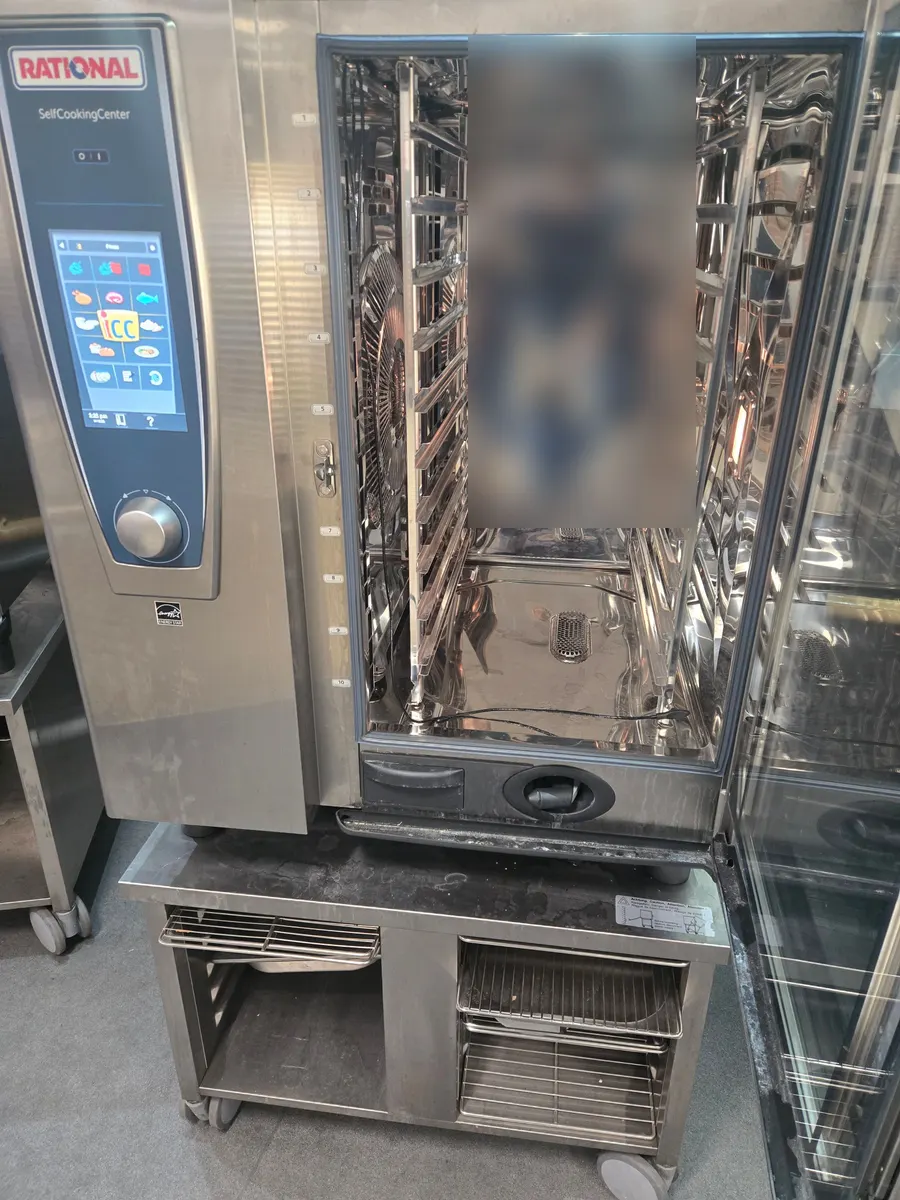
Read the green light on the fan motor
Each fan motor has a green status light, which makes the first check quick. A steady light means the motor electronics are alive; a blinking light means the motor is reporting a fault. Rational’s service instructions explain how to count the blinks to read the fault. From our experience, only one of those blink codes changes what we do: overvoltage. Every other blink code on a fan motor means the motor is faulty, and replacing it is the reliable fix.
Overvoltage: why a new fan motor can fail again
If the blink code shows that the motor has seen too high a voltage, a new motor will fail the same way. These motors work across a wide supply range, from about 120 V up to a maximum of 240 V, and a site whose mains runs high pushes them to the top of it. When we see overvoltage we fit a step-down transformer and bring the motor supply down to around 180 V, the middle of its range. We learned this the hard way: on one oven we replaced the fan motors three times before we found that the supply was the cause. Since then, overvoltage on the blink code means a transformer first, then the motor.
When it is not the motor: find the module pulling the bus down
The fan motors, the lighting, the pump board and on gas ovens the ignition all talk to the control board over the same bus. One faulty module can disturb the bus so that nothing answers, and the oven then blames a fan motor that is fine. When the cause is not clear, we disconnect from the bus everything the oven can run without and add the modules back one by one:
- The lighting module. Very often this is the culprit: a faulty light module upsets the bus and everything stops working. Disconnect it and test again.
- The gas ignition (gas ovens). The gas ignition system sits on the bus and often fails. Take it off the bus cable and test the oven without it.
- The cables. Replacing a bus cable is one option, but the cables run in a chain from one motor to the next and on to the third, so finding the bad one by replacement is slow.
The quickest test: swap the top and bottom motors
The simplest way to tell a motor fault from a cable fault is to swap the two motors over. We move the bus cable across and swap the plugs on the motors that tell the oven which motor is the top one and which the bottom. If the code follows the motor (34.1 becomes 34.2), the motor is faulty. If it stays with the position, the fault is in the cable or the connection to that place. It costs no parts and settles the question in minutes.
Service first
Every repair we do starts with checking and cleaning the oven. Grease and debris around a fan motor, a blocked fan or a wet connection cause many of the faults that end up as Service 34, and a proper service often finds them before a motor fails. A regular Rational oven service checks the fans, the connections and the error log. See also Rational Service 25, the most common Rational oven errors and a Rational cooking unevenly because of the lower fan motor.
Book a Rational repair in London
LE Company’s call-out is from £175 + VAT and includes the first 30 minutes on site, when the engineer finds the cause of the fault. The cost of the repair is agreed with you before any work starts. 12-month guarantee on parts — we fit only original manufacturer parts. We repair Rational iCombi Pro, iCombi Classic, SelfCookingCenter and CombiMaster Plus in restaurants, hotels and pubs; see commercial oven repair and catering equipment repair, or call +44 203 603 7172, Monday to Saturday, 8am to 8pm.