Gaggenau vs Miele: an engineer’s comparison
Gaggenau and Miele are both premium German brands, and both make a top line and a lower line. LE Company engineers repair both in London, and from what we see inside them: if you plan to spend between £1,000 and £2,000 on an appliance, at 2025–2026 prices, there is no real difference between the two. In premium fridges Gaggenau is ahead: it moves cold air better and uses less energy. In dishwashers the washing quality is practically the same. In ovens both are at the top, but recently SMEG has overtaken them. For repairs, see our Gaggenau repair and Miele repair pages.
Gaggenau vs Miele fridge
With both brands, look at how the fridge is cooled, not at the badge. If you buy a fridge where only the back panel is cooled and a fan stirs the air, do not expect a good flow of cold air inside. You can open it four or five times a day. Open it more often and the air temperature rises, on average to around 9–11°C. The food already inside is not harmed, because it holds its own temperature. But new food you put in will only be properly cold the next morning, and you will not get that feeling of cold air meeting you when you open the door. That you only get with top-class fridges. We explain the difference in detail in are expensive fridges worth it.
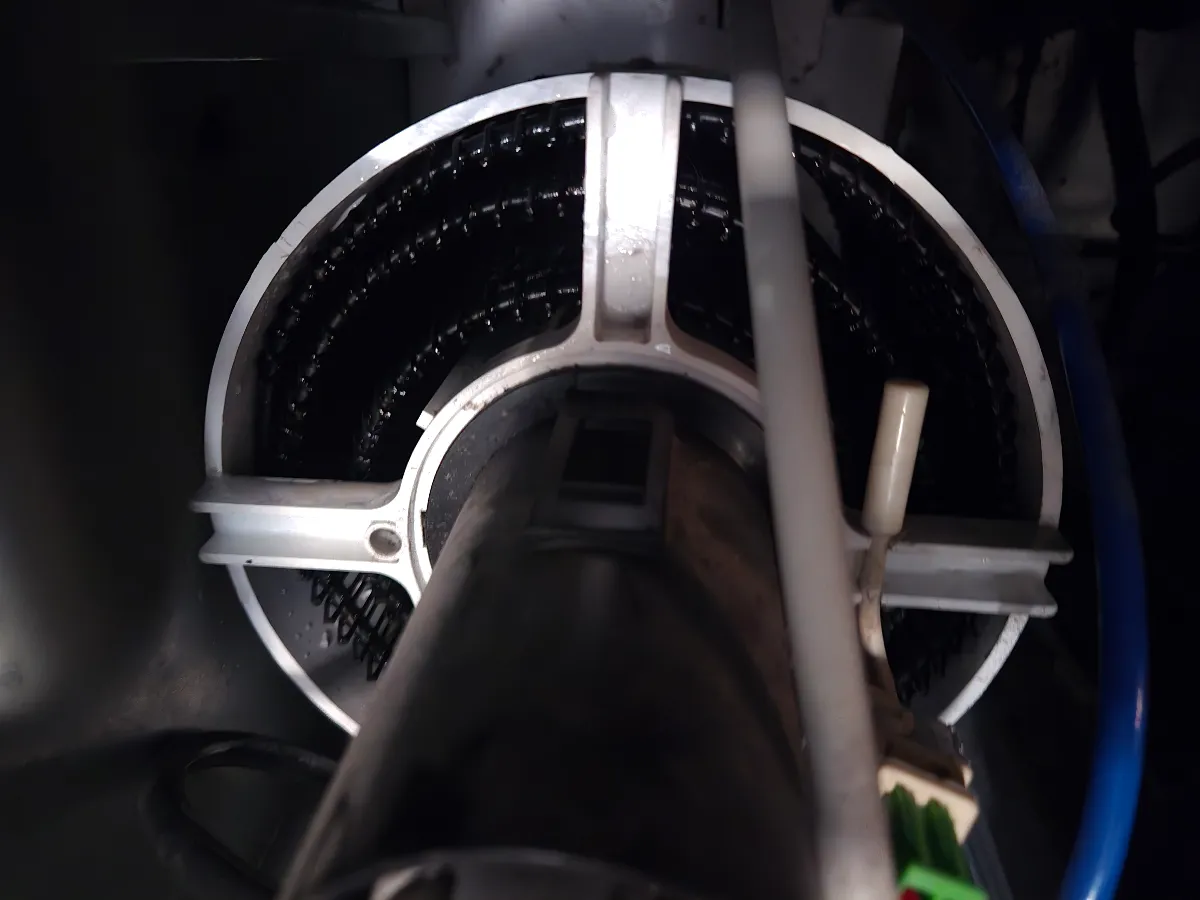
In the premium models, Gaggenau is ahead. Its whole system is built to move the air: the air is driven through the cooling panels, through the evaporator inside them, and back into the compartment. For low energy use we would also put Gaggenau first. Its one weak point is a condenser that needs cleaning, as in this Gaggenau freezer that was alarming and not freezing. See our Gaggenau fridge repair page, and our Liebherr vs Gaggenau fridge comparison.
Gaggenau vs Miele oven, and why SMEG has overtaken both
In ovens, both Gaggenau and Miele hold top positions. Recently, though, SMEG has overtaken them. Its Galileo Omnichef combines three ovens in one: a microwave, a steam oven and a conventional oven.
Its handling of water is excellent. There is practically no water left in the system: when you finish cooking, the oven makes you empty it. That is why you will practically never get a leak. We tested it hard for five years, expecting something to break. In all that time we replaced only one conventional heating element, and that happens on every make of oven.
SMEG’s build quality is very high, and we would put it at the very top. Every joint is fitted with a gasket, which we do not see on any other make. You will practically never hear a rattle, a vibration or a scrape, and opening and closing the door is a pleasure in itself. Even the smaller, compact model has an inside that looks practically no different from a full-size Gaggenau or Miele. See why a Smeg oven stops working, our SMEG oven repair and Gaggenau oven repair pages, and why Miele ovens are built to last.
Gaggenau vs Miele dishwasher
Here the quality is the same, and the leak protection is the same. Washing quality is practically identical. Choose by what you like: in the new models, look at the functions and how convenient they are to use. If your Miele shows a code, see Miele error codes. See our Miele dishwasher repair page and what to do when a Gaggenau dishwasher is not draining.
Who makes Gaggenau and Miele?
Miele is a family-owned company, owned by the Miele and Zinkann families. Its ovens are made in Oelde, its steam ovens and hobs in Bünde and its dishwashers in Bielefeld, all in Germany. Gaggenau has been part of BSH, the Bosch home appliance group, since 1995. It names factories in Germany, France, Slovenia, Spain and Turkey; the built-in Gaggenau fridge we repaired in November was labelled made in Turkey.
Warranty and spare parts
Miele gives a standard 2-year manufacturer’s guarantee on its domestic appliances in the UK, with longer cover in promotions or as a paid extension. Gaggenau’s UK terms extend its 2-year warranty by a further 3 years, to 5 in total; check the conditions when you register the appliance. Both brands say spare parts are available for up to 15 years after a model goes out of production. “Up to” matters: in October we met a Gaggenau wine fridge whose control board had already been discontinued.
Is Miele really tested for 20 years?
Miele tests some appliances to simulate 20 years of average household use, for example 5,600 cycles for dishwashers and 2,160 hours for ovens and steam ovens. Miele itself says this is not a guarantee of durability, and its list does not include fridges, coffee machines or hobs.
Gaggenau or Miele: which should you buy?
For a fridge in the £1,000–2,000 range, either; check how it is cooled. For a premium fridge, Gaggenau, for the air flow and the low energy use. For a dishwasher, whichever functions you like. For an oven, look at SMEG as well as Gaggenau and Miele. If you are comparing range cookers, see our Lacanche vs La Cornue comparison.
Book a Gaggenau or Miele repair in London
LE Company’s call-out is from £175 + VAT and includes the first 30 minutes on site, when the engineer finds the cause of the fault. The cost of the repair is agreed with you before any work starts. Call +44 203 603 7172, or see our frequently asked questions.