Gaggenau fridge and freezer problems: not cooling, beeping and error codes
When a Gaggenau fridge is not cooling, or a Gaggenau freezer beeps and will not freeze, the cause we find most often is heat: a condenser clogged with dust makes the machine compartment overheat, and then the compressor inverter, the control board or the compressor fails (the same causes across all brands are in fridge freezer not cooling: causes and fixes). The other common causes are an iced-up evaporator (a failed evaporator fan motor or defrost part), a door that does not seal, and low refrigerant. Gaggenau’s own manuals publish only a few display messages for its fridges and freezers: “E..” (the electronics have detected a fault), “LOWPOWER”, “HIGHVOLT” and the door and temperature alarms. This guide from LE Company, Gaggenau repair engineers in London, explains each one, what you can safely check yourself, and what our job records show. For repairs, see our Gaggenau fridge repair in London page.
Gaggenau fridge not cooling
First check the simple things that Gaggenau lists in its manuals: the appliance is switched on, the fuse has not tripped, the doors close fully and the ventilation openings are not covered. Gaggenau’s instructions for use for the RF 411 to RF 471 Vario freezers say it plainly: the heated air must be able to escape, or the refrigeration unit has to work harder. On a freestanding model, Gaggenau’s manuals for the RT 282 and RB 289 fridge-freezers add one more check: if the fridge is not cooling but the display and lights are on, showroom mode may be switched on, and running the appliance self-test (described below) switches it back to normal operation.
If none of that applies, these are the faults we find on Gaggenau fridges that are not cooling:
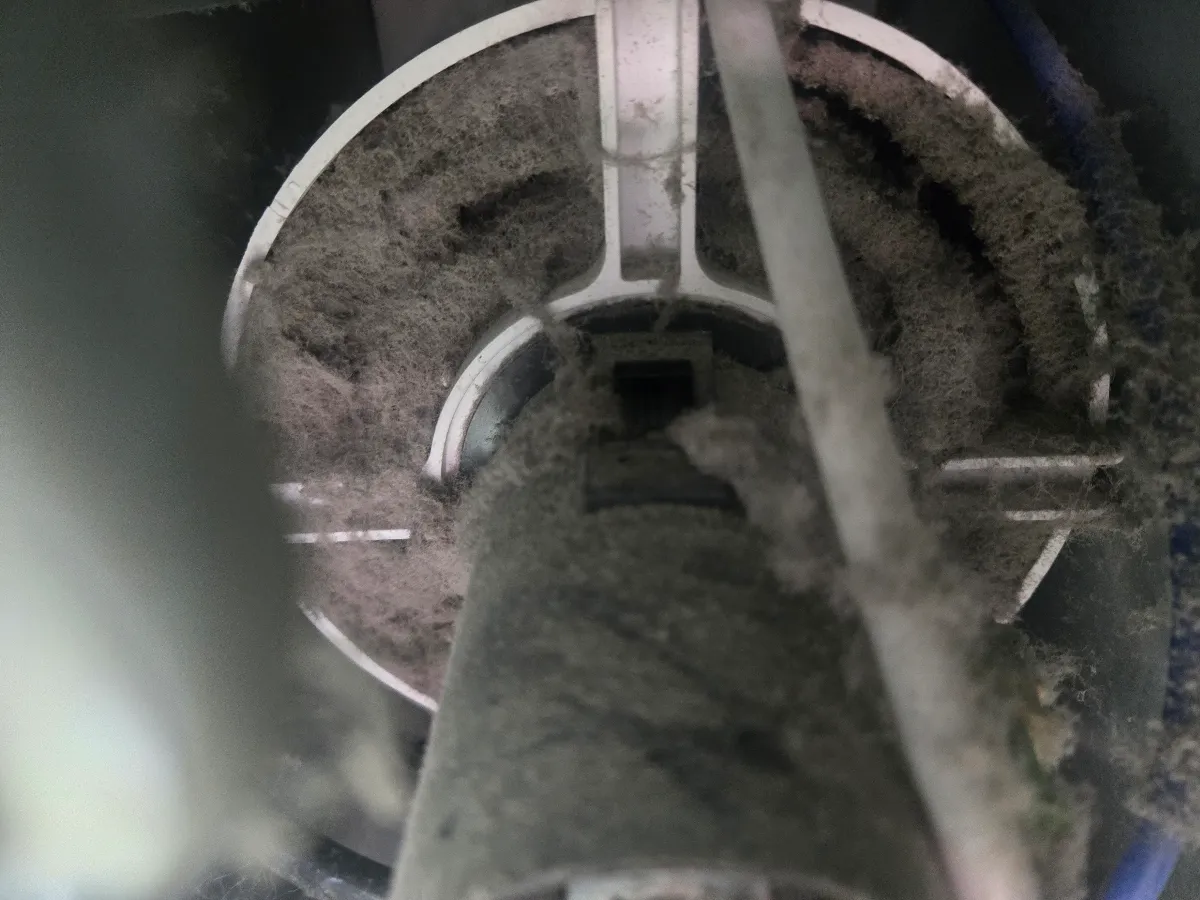
- A condenser full of dust. The condenser carries heat away from the fridge. Covered in dust and fluff, it cannot, the machine compartment overheats and the fridge warms up. We clean it first, on every visit.
- A failed compressor inverter or control board. These are the parts we replace most on Gaggenau fridges and freezers, often together, and very often after the appliance has run hot for a long time.
- An iced-up evaporator. When the evaporator fan motor, the defrost heater or the defrost control fails, ice builds up behind the back panel, the cold air stops moving and the fridge warms up while the freezer may still work.
- Low refrigerant. On some fridges and wine cabinets the system is low on gas. We look for the leak before we refill it.
- A worn compressor. A loud or unusual noise from the back can be the compressor itself.
In a home in Mayfair this autumn a built-in Gaggenau fridge was reading about 12 °C. Behind the back panel the evaporator had iced up, the fan had stopped and the compressor would only run at low speed. The compressor inverter was exchanged on the first visit. On the second, the control board, compressor and fan motor were replaced, all tested in our workshop before fitting. In another home a built-in Gaggenau fridge that was not cooling needed a new control board, evaporator fan motor and defrost drip plate, and its compressor started only after the inverter was replaced.
Gaggenau freezer not freezing
A Gaggenau freezer that is not freezing usually shows the same pattern, and it usually beeps as well, because the temperature alarm switches on. This year a Gaggenau freezer in London had defrosted itself and was beeping: it had overheated because of dust on the condenser, and the compressor would not start. Our engineer fitted a test control board and a test inverter to find which part had failed. In a home in Belgravia three Gaggenau Vario units had all overheated for the same reason; we wrote that job up in full in Gaggenau freezer alarm and not freezing: a dust-clogged condenser.
Gaggenau’s manual for the RF 411 to RF 471 freezers also lists three reasons for the refrigeration unit running more often and for longer: the door is opened often, the ventilation openings are covered, or a large amount of fresh food has gone in. For the last one, Gaggenau says to switch on fast freezing first.
Gaggenau fridge error codes
Gaggenau does not publish a list of numbered error codes for its fridges and freezers in the owner’s manuals. The display messages below are the ones Gaggenau does explain, in the Use & Care Guide for the RC 462 and RC 472 fridges and the instructions for use for the RF 411, RF 413, RF 461, RF 463 and RF 471 freezers.
Display | What Gaggenau says it means | What Gaggenau says to do |
E.. | The electronics have detected a fault | Call customer service |
LOWPOWER | The mains voltage is below the permitted limit | It goes out when the voltage recovers; if it stays, tell the energy supplier |
HIGHVOLT | The mains voltage is above the permitted limit | It goes out when the voltage recovers; if it stays, tell the energy supplier |
“Alarm” and the freezer temperature flashing | Temperature alarm: the freezer is too warm and the frozen food is at risk of thawing | Press the alarm button to see the warmest temperature reached, then to silence it |
On the newer RB 289 fridge-freezer, Gaggenau’s information for use shows an error symbol instead of “E..”. Its advice is to switch the appliance off, disconnect it from the mains for five minutes and reconnect it; if the message comes back, call customer service.
Customers sometimes tell us about other codes on a Gaggenau fridge, usually a number read from the display. We could not find an official Gaggenau meaning for them, so we will not guess one here. Take a photo of the display and of the rating plate inside the fridge (it carries the E-Nr and FD numbers) and send it with your enquiry. If you are looking for oven codes, see Gaggenau oven error codes explained.
Why is my Gaggenau fridge beeping?
According to Gaggenau’s manuals, a Gaggenau fridge or freezer beeps for one of two reasons:
- The door alarm. On the RC 462 and RC 472 fridges and the RF 411 to RF 471 freezers it sounds when a door has been open for longer than three minutes; on the RB 292 fridge-freezer, after one minute. Closing the door stops it.
- The temperature alarm. The freezer has become too warm. Gaggenau says it can also sound without any risk to the food: just after the appliance is switched on, after a large amount of fresh food has gone in, or after the door was open for too long.
If your Gaggenau fridge keeps beeping with every door closed, something is wrong. In one London home a fridge freezer kept beeping even though all the doors were shut and it had been reset again and again; our engineers replaced the compressor inverter, a drawer rail and the control board, and on the check visit it was working. A door that does not seal will also keep the alarm going: in another home the seal had come off a freezer door, the alarm kept sounding and water collected on the shelf. A worn door gasket, a failed door heater or a faulty door switch can do the same. From our job records, more than 40 of our Gaggenau fridge and freezer requests since 2022 began with an alarm that would not stop.
Gaggenau fridge alarm reset
On Vario fridges and freezers, Gaggenau’s manuals say to press the alarm button to switch the warning signal off. On a freezer, the first press shows the warmest temperature reached for five seconds; then the warning stops, and the alarm display goes out once the set temperature is reached again. Check whether the frozen food has thawed: Gaggenau warns not to refreeze food that has defrosted.
On the RB 289 fridge-freezer, Gaggenau’s information for use describes an appliance self-test (the RT 282 manual has the same test). Switch the appliance off, switch it back on after about five minutes, and within the first 10 seconds press and hold the freezer compartment button for 3 to 5 seconds, until a signal sounds. A long signal sounds while the test runs. Two signals at the end and the set temperature on the display mean the appliance is OK; five signals and a flashing display mean you should call an engineer.
Silencing the alarm does not fix the cause. If the alarm comes back, or the temperature keeps rising, do not keep resetting it.
Gaggenau ice maker not working
Gaggenau’s manual for the RF 411 to RF 471 freezers lists these reasons for an ice maker that does not work: no fresh water reaching it (check the water connection), a freezer that is too warm, an ice maker that has only just been switched on (ice production takes about 24 hours to start), low water pressure, or a dirty screen on the water supply, which needs customer service. When we open them up we also find a broken drop arm, a failed motor, a piece of plastic jammed inside, or a water supply that has come disconnected. See our ice maker repair page.
What our job records show
From our job records, LE Company has handled more than 900 Gaggenau requests in London since 2022, and more than 450 of them were about fridges, freezers and wine cabinets. The compressor inverter is on the invoices of more than 25 of those jobs, the main control board on more than 20 and the compressor on more than 15. Fan motors, door seals and ice makers come next. On some older models the original control board is no longer made, and a refurbished board is then the only option.
Most of these failures begin with dust on the condenser. That is why every repair we do starts with checking and cleaning the appliance: most faults begin with dust, scale, grease or a blockage. On a fridge it is the condenser and its fan; on the water side it is limescale, which can make the drip tray overflow and leave water on the floor. A clean condenser lets the compressor run cooler and for less time. Gaggenau and Liebherr share much of their refrigeration technology; read our Liebherr vs Gaggenau fridge comparison for what that means for repairs.
When to call a Gaggenau engineer
Call an engineer if the display shows “E..” or an error symbol that comes back after a restart, if the alarm keeps sounding with the doors closed, if the temperature keeps rising, if the fridge trips the electrics, or if you hear a new loud noise from the back. Do not try to chip ice off the evaporator or open the sealed refrigerant system: the refrigerant in many Gaggenau fridges is flammable, and Gaggenau warns that damaged tubes can let it escape. Our engineers are Gas Safe and F-Gas registered.
Book a Gaggenau fridge repair in London
LE Company’s call-out is from £175 + VAT and includes the first 30 minutes on site, when the engineer finds the cause of the fault. The cost of the repair is agreed with you before any work starts. 12-month guarantee on parts — we fit only original manufacturer parts. Call +44 203 603 7172. The visit with the assessment is paid first. We work Monday to Saturday, 8am to 8pm; Sunday visits are for service-contract customers only. See our Gaggenau repair service for all Gaggenau appliances, our appliance repair in London, or our frequently asked questions.